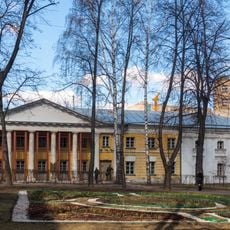
Vyazemskiy-Dolgorukiy estate, Manor estate in Khamovniki District, Russia
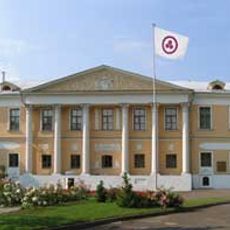
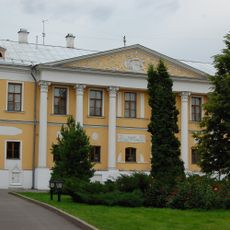
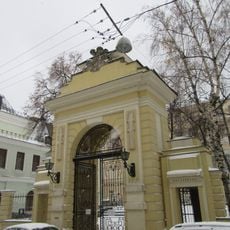
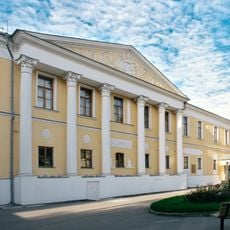
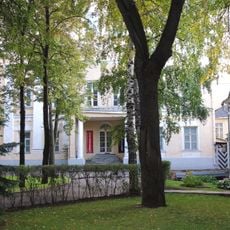
The Vyazemskiy-Dolgorukiy estate stands at Maly Znamensky Lane in Khamovniki, its main house built in the 1720s on 17th-century stone chambers. Two classicist wings were added in 1925-1926 by architect Sergei Gruzenberg, reusing decorative elements from the main building. Inside, only the vaulted chambers on the ground floor survive from the older structure; a copy of Friedrich Engels's Manchester house was built in the courtyard.
The stone chambers on the site were probably built by okolnichy Semyon Tolchanov in the 17th century; in 1711 the plot passed to Moscow governor Sergei Golitsyn as his wife's dowry, and a classicist house rose on the old chambers. Prince Andrei Vyazemsky bought it in 1790, and Nikolai Karamzin, who married Vyazemsky's daughter Ekaterina in 1804, moved into the lower-floor rooms. In October 1905 the Dolgorukov brothers hosted the founding congress of the Constitutional Democratic Party here.
The estate's name links two princely families: the Vyazemskys, who bought it in 1790, and the Dolgorukovs, owners from 1875. In 1896–1898 the painter Valentin Serov rented a first-floor flat here. In October 1905 the Dolgorukov brothers hosted the founding congress of the Constitutional Democratic Party in the house.
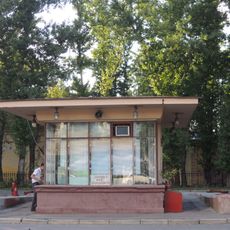
The estate stands at the corner of Maly Znamensky Lane and Bolshoy Znamensky Lane, near the Kropotkinskaya metro station. The main building is closed during the reconstruction of the museum town; the planned 8,000 m² garden and the underground gallery linking it to the Pushkin Museum are not yet open. Access to the courtyard is limited by construction work.
In 1925–1926 two classicist wings by architect Sergei Gruzenberg were added, reusing decorative elements from the main house, and a copy of Friedrich Engels's Manchester house was built in the courtyard for the Marx-Engels Institute.
The community of curious travelers
AroundUs brings together thousands of curated places, local tips, and hidden gems, enriched daily by 93,292 contributors worldwide.