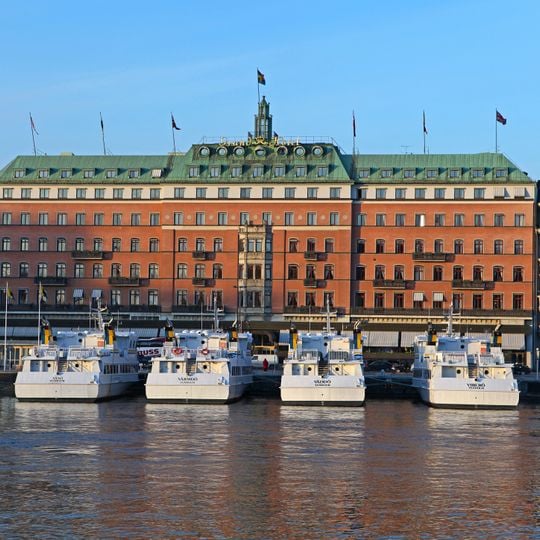
Grand Hôtel, hotel in Stockholm, Sweden
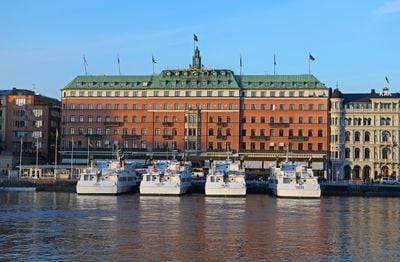
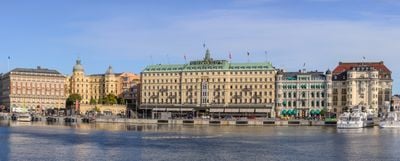
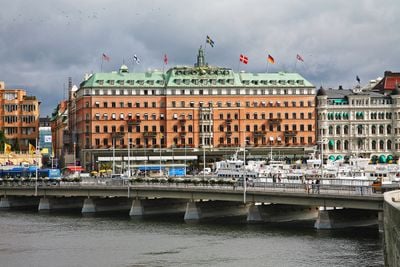
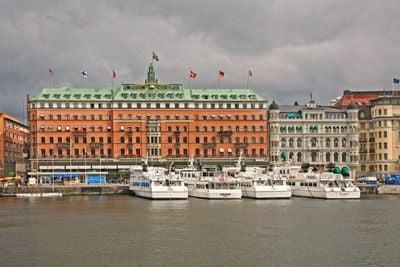
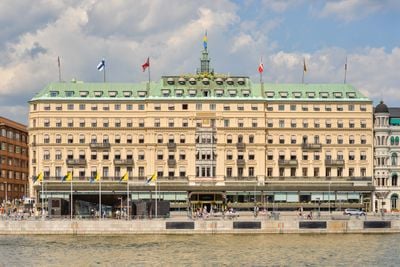
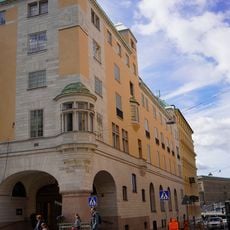
The Grand Hôtel is a hotel located by the waterfront in Stockholm with views toward the Royal Palace and Gamla Stan. The building features traditional European stone architecture with a distinctive facade, while the interior showcases high ceilings, polished floors, and refined decorative details throughout.
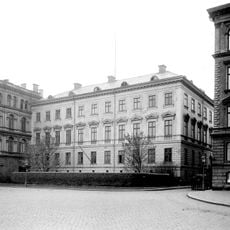
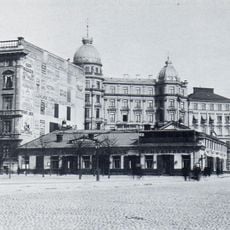
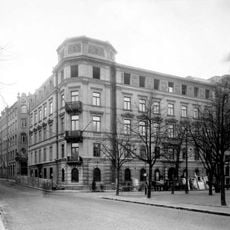
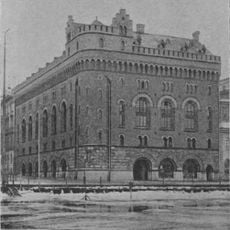
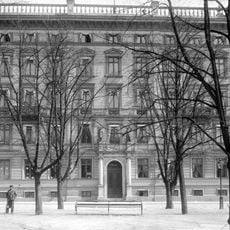
Jean-François Régis Cadier, a Frenchman who arrived in Stockholm in 1852, commissioned architect Axel Kumlien; builder Hans Jacob Hallström began work in March 1872, and the hotel welcomed its first guests on 14 June 1874. The Bolinderska palatset was acquired in 1889, the facade was redesigned in 1899, and the Grand Hôtel Royal with its Winter Garden was added in 1909. Since 1901 every Nobel laureate has stayed here.
The name Grand Hôtel was chosen by its French founder, Jean-François Régis Cadier, who arrived in Stockholm in 1852. Since 1901, Nobel Prize laureates and their families have traditionally stayed here. In 1921 the National Association for Women's Suffrage held its final dinner at the hotel after winning the vote, honouring leaders such as Ann-Margret Holmgren and Anna Whitlock.
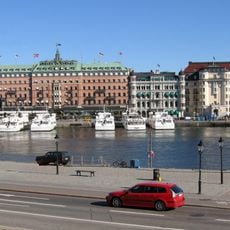
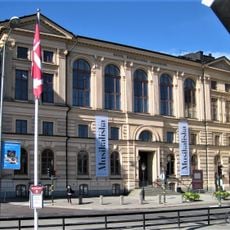
The hotel stands on Blasieholmen, next to the Nationalmuseum and across the water from the Royal Palace and Gamla stan. The main entrance faces the quay where the covered walkway and awnings run along the base of the facade. Ferries to the archipelago and central trams and buses stop within walking distance.
Since 1901, Nobel Prize laureates and their families have traditionally stayed here during the Nobel festivities. The hotel also hosted the final dinner of the National Association for Women's Suffrage in 1921, after women's suffrage was won, honouring leaders such as Ann-Margret Holmgren and Anna Whitlock.
The community of curious travelers
AroundUs brings together thousands of curated places, local tips, and hidden gems, enriched daily by 93,361 contributors worldwide.