Tyresö Palace, Palace and museum in Tyresö, Sweden.
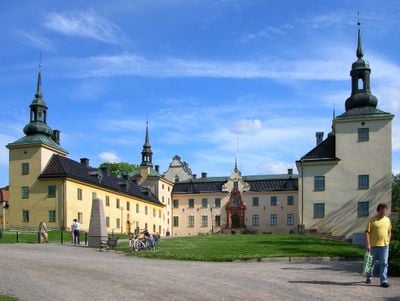
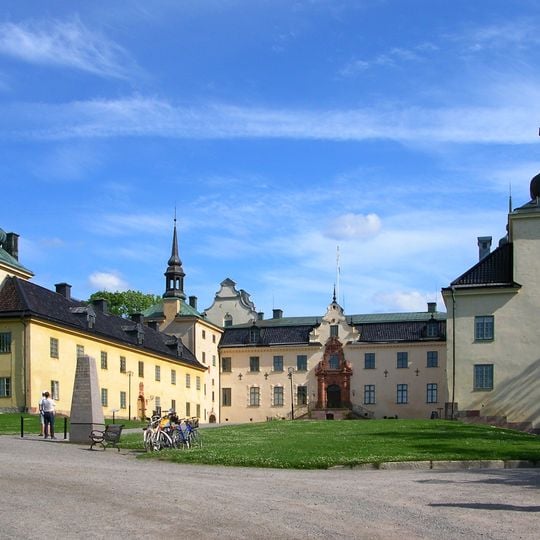
Tyresö Palace is a three-story castle on the Kalvfjärden shore with two gabled towers and detached wings topped with copper-clad spires. The building spans approximately 40 meters and blends national Romantic style with Art Nouveau features.
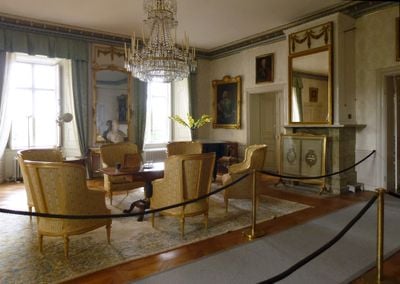
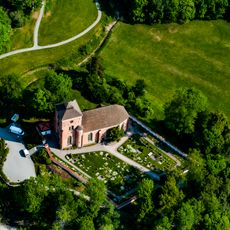
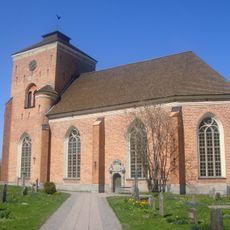
Gabriel Gustafsson Oxenstierna began building the palace in the 1620s on the site east of his mother's medieval manor; the mason Hans Grot was paid in 1632 to finish the great stone house, which stood under roof that year, and services were held there in 1635. Oxenstierna also built Tyresö Church (1638–1640), where he was buried in 1641. In 1892 Marquis Claes Lagergren bought the estate and, with architect Isak Gustaf Clason, rebuilt the palace in National Romantic style, inspired by 17th-century drawings; he died in 1930 and left it to the Nordic Museum.
The palace is named after Tyresö parish, recorded in the 14th century as Tyrisedhe and later Töresö. Marquis Claes Lagergren, who bought it in 1892, wanted it kept as a living document of Swedish history. In the wings today are a café, a spa and the Slottskrog restaurant; below the palace, Prinsvillan housed Prince Eugen for some summers between 1894 and 1909.
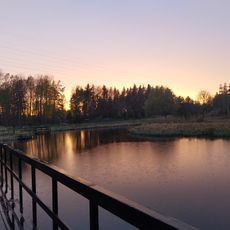
The palace lies about 25 km southeast of central Stockholm, by the inner end of Kalvfjärden. Guided tours run in summer; the English park, the first in Sweden, laid out by Fredrik Magnus Piper, is open to visitors. A bridge from the park's southern side, behind the palace, leads to Notholmen, which has a café and a guest harbour.
The English garden was laid out in the 1770s by Fredrik Magnus Piper, the first of its kind in Sweden. It mixes an English park, a Swedish floral meadow and fairy-tale imagery, with the ancient Tyresö forest as its model. The landscape garden still exists beside the palace.
The community of curious travelers
AroundUs brings together thousands of curated places, local tips, and hidden gems, enriched daily by 93,507 contributors worldwide.