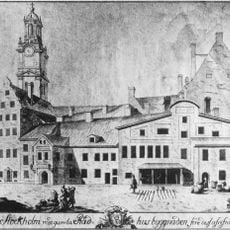
Stockholm Stock Exchange Building, Former stock exchange building in Gamla Stan, Stockholm, Sweden
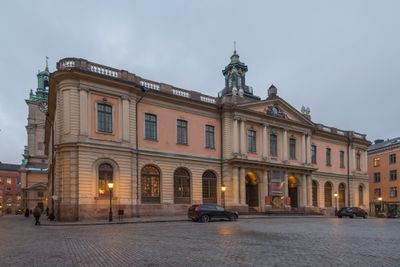
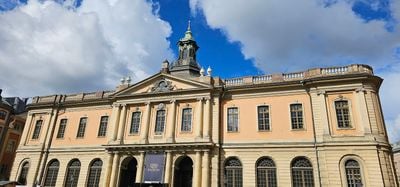
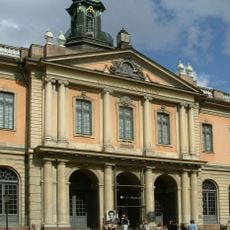
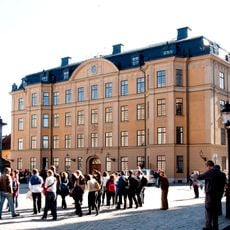
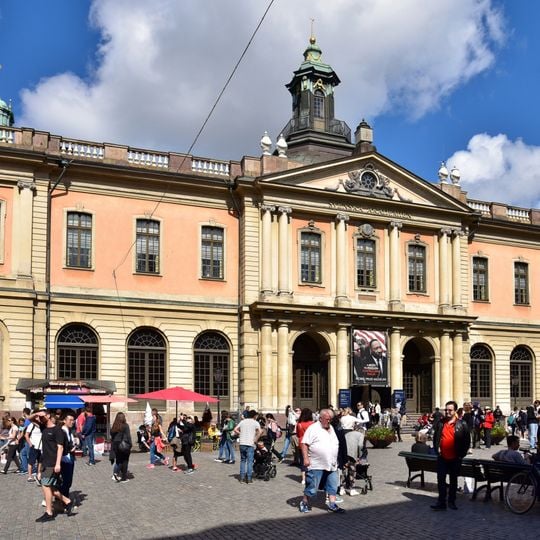
The Stockholm Stock Exchange Building (Börshuset) is a two-storey building on the north side of Stortorget in Gamla stan. Its peach-orange upper facade sits above a rusticated stone ground floor, with a central projecting section framed by paired columns and topped by a triangular pediment inscribed "BÖRSEN". A dark clock tower with a lantern and spire rises above the pediment, and the ground floor has round-arched windows and doorways.
The building was erected between 1773 and 1778 to designs by Erik Palmstedt, who reworked plans by Carl Johan Cronstedt, and was inaugurated in 1776 by Gustav III in the main exchange hall. It was largely financed by the börstolagen, an extra duty decided by the Riksdag. The Swedish Academy obtained the upper floor in 1914 through a donation from Magna Sunnerdahl and moved in in 1921. The stock exchange left the building completely in 1998.
Since 1914 the upper floor has belonged to the Swedish Academy, which meets here to choose the Nobel laureate in literature. The ground floor held the Stockholm Stock Exchange until 1998, and since 2001 the Nobel Museum has occupied the Great Exchange Hall, whose paired Ionic pilasters give it a severe look.
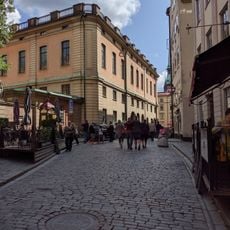
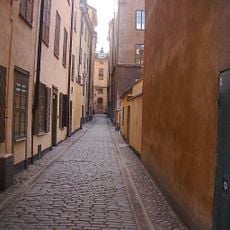
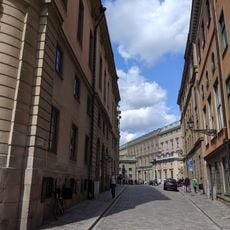
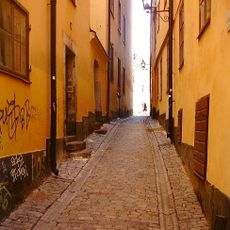
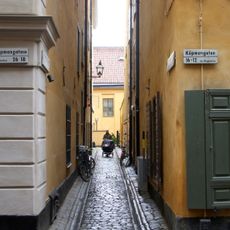
The building faces the north side of Stortorget in Gamla stan; the Nobel Museum entrance is on the square, and the Nobel Library and Swedish Academy rooms are upstairs. The nearest metro station is Gamla stan, a short walk away. The square in front is paved and level, but the surrounding old-town lanes are narrow and cobbled.
The building's forms follow French 18th-century classicism, applied with a touch of rococo in the facade and a clearly marked central pediment. Erik Palmstedt reworked Carl Johan Cronstedt's original drawings; Cronstedt is better known for constructing the first Swedish tiled stoves.
The community of curious travelers
AroundUs brings together thousands of curated places, local tips, and hidden gems, enriched daily by 93,459 contributors worldwide.