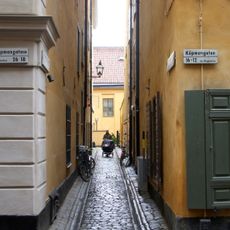
Kindstugatan, Pedestrian zone in Stockholm Old Town, Sweden
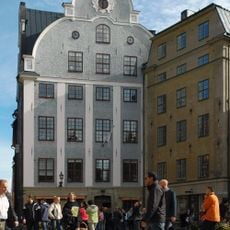
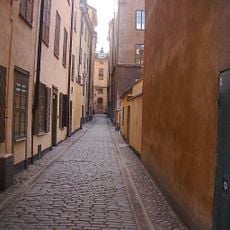
Kindstugatan runs west from Brända Tomten to Tyska Brinken, crossed by Svartmangatan and Skomakargatan. The grey Törne House at No. 4 carries a 1674 cartouche; No. 13, built in 1768, has a rounded corner left open for carriage turning; No. 18, Brasan, hides a medieval basement behind a 19th-century facade.
In medieval times the street was called tverru gatu, "Cross Street", because it ran between the eastern city gate at today's Köpmantorget and a western gate where the name changes to Tyska Brinken. Its oldest recorded name, kindhæstagatan (1449), contains the old Swedish word kindhäst, "box on the ear", probably referring to a renowned or notorious fight. A brothel here featured in the Sara Simonsdotter prostitution scandal of the 17th century.
The name derives from the old Swedish word kindhäst, literally "cheek horse", meaning a box on the ear, probably recalling a famous brawl or the street's brawling reputation. At number 14, the tavern Fimmelstången stood where the poet Lasse Lucidor was stabbed to death in 1674. In the 1760s, number 11 hosted performances by Stenborg's Company, then Sweden's only Swedish-language theatre in the capital.
The zone is mainly reserved for pedestrians, with only limited access for emergency services and delivery vehicles. Flat paving and wide passages make walking comfortable, and proximity to other Old Town attractions makes it a natural route when exploring.
One building on the street still displays an unusual architectural change from the 17th century where a portal was later converted into a window. This adaptation reflects how buildings were adjusted over time to meet changing needs.
The community of curious travelers
AroundUs brings together thousands of curated places, local tips, and hidden gems, enriched daily by 93,932 contributors worldwide.