Kronhuset, Redbrick architectural complex in Västra Nordstaden, Sweden
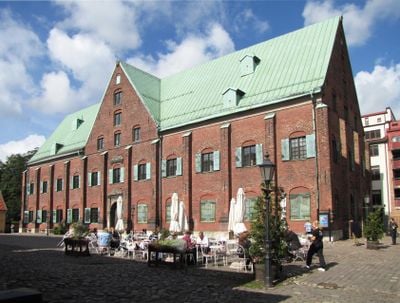
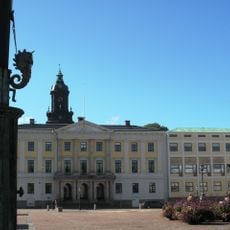
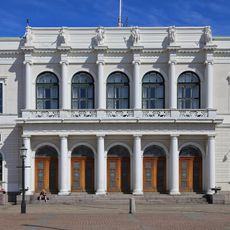
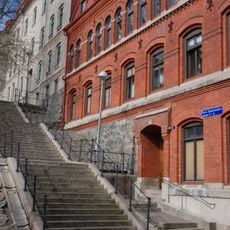
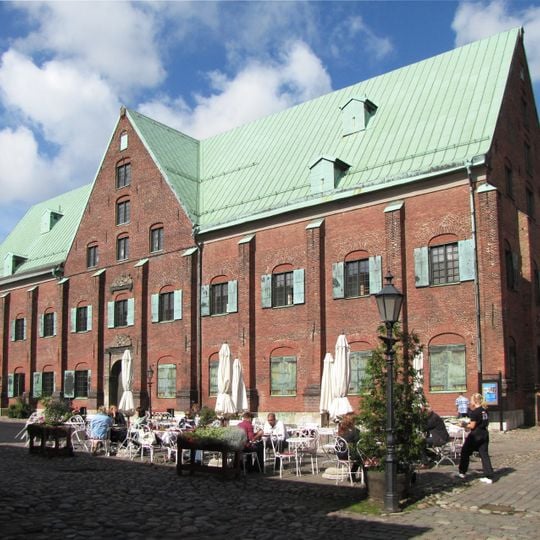
Kronhuset is a red-brick architectural complex in Västra Nordstaden featuring Dutch design influences and a large assembly hall on the ground floor. The surrounding Bodarna buildings form a cohesive ensemble that extends around the plaza.
The Riksdag convened here on 4 January 1660 under Karl X Gustav, making the ground-floor hall the Rikssal; the four-year-old crown prince was proclaimed king there on 1 March. From 1680 the lower floor served as the Garrison Parish church until the last service on 25 March 1898. The state sold the building to Gothenburg in 1927, and after a three-year restoration King Gustav VI Adolf reopened it on 17 May 1957.
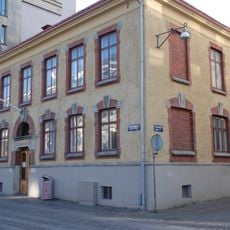
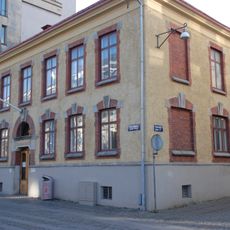
The yellow sheds around the courtyard, Kronhusbodarna, were built in two stages: the eastern row in 1756–59, the western in 1764–69. They held a smithy, a wheelwright and workshops, later railway stores, and since 1971 private tenants. Today they sell pottery, glassware, leather goods and furnishings, alongside a watchmaker and a café.
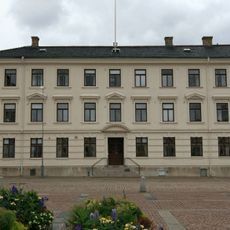
The courtyard is paved with cobblestones and ringed by the yellow Kronhusbodarna sheds, with outdoor seating in front of the main building. The site lies in Västra Nordstaden, a short walk from the central station and tram stops. The Rikssal is not always open, so check opening times before planning a visit.
The Rikssal on the ground floor has no load-bearing pillars; its ceiling joists hang from the roof truss, which rests on the masonry. To brace this, 28 contreforts were built into the walls, 12 on each long side and 2 on each gable. Iron beams replaced 12 old roof beams in the 1950s renovation.
The community of curious travelers
AroundUs brings together thousands of curated places, local tips, and hidden gems, enriched daily by 93,693 contributors worldwide.