Björkekärr, Residential district in Härlanda, Gothenburg, Sweden
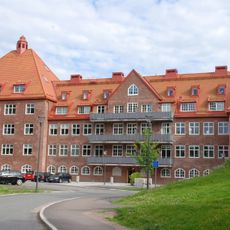
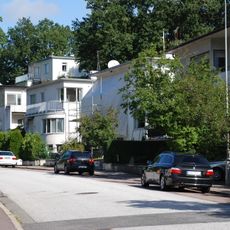
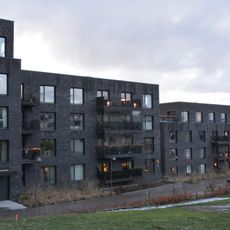
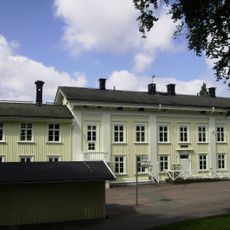
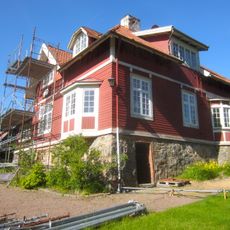
Björkekärr is a residential neighborhood in Gothenburg with a mix of single-family homes and apartment blocks arranged around green spaces and parks. The area is organized with clear streets and good connections to public transportation routes.
Björkekärr was farmland until it was incorporated from Örgryte in 1922. Between 1951 and 1957 the area was built up with 3- to 4-storey lamella houses, villas and terraced houses, about 1,800 flats in all. In 1959–1963 the Robertshöjd area followed with roughly 1,000 more dwellings of the same types.
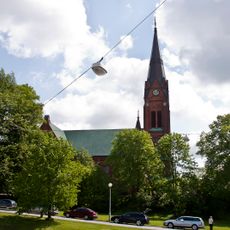
The district's squares and streets carry names from the sawmill industry that once operated here: Stabbetorget (1954) refers to a timber stack, and Trätorget and Spåntorget mean 'wood square' and 'chip square'. Sörensens gata honours the sawmill's founder. Stabbetorget now holds a food shop, health centre, pizzeria and Björkekärrs kyrka.
The area has essential services like schools and shops with direct public transport to Gothenburg's central areas. You can easily find local amenities and reach the city center quickly.
Björkekärr's water tower, south of Träringen, was designed by Jan Wallinder and completed in 1969; its shape is likened to a mushroom. The district's streets and squares take their names from the sawmill industry once run here by Säfveåns AB, and Sörensens gata honours that company's founder.
The community of curious travelers
AroundUs brings together thousands of curated places, local tips, and hidden gems, enriched daily by 94,458 contributors worldwide.