Flottans Badhus, Public bathhouse on Skeppsholmen, Sweden
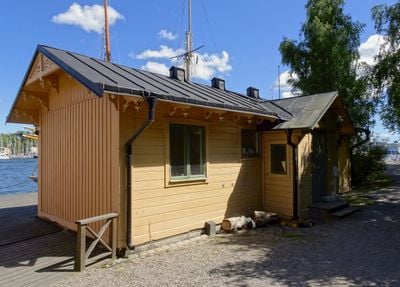
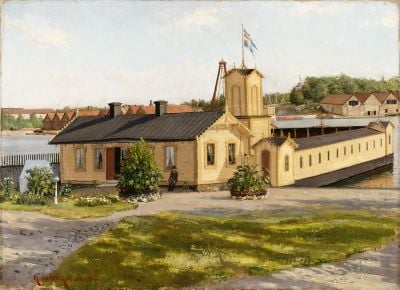
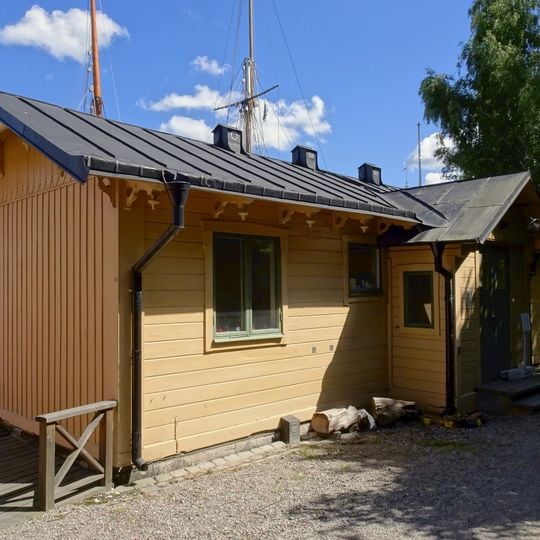
Flottans Badhus on Skeppsholmen in Stockholm was a complex of one warm bath and two cold baths. The surviving bathmaster's pavilion is a single-storey pale yellow wooden building with a dark low-pitched roof, two brick chimneys and a stone base; a taller square yellow wooden tower with a flagpole rises beside it.
Around 1840 cold bathing became compulsory for the regiments stationed in Stockholm, so a floating bathhouse was built on Skeppsholmen's eastern shore to Fredrik Blom's drawings. A small wooden pavilion beside it later housed the bath attendant, and in the 1870s the naval warm bath was fitted out in the neighbouring old smithy. Bathing in the polluted water was banned in 1923 and the cold bath was demolished; the warm bath was used until 1969, when the naval dockyard moved to Muskö.
The bathhouse is known above all through Eugene Jansson's paintings of naked, athletic sailors bathing there. Jansson, who suffered from a kidney disease that forced him to exercise and bathe regularly, gained access through contacts and found models for his figure painting; with some of them he began a homosexual relationship, forbidden at the time.
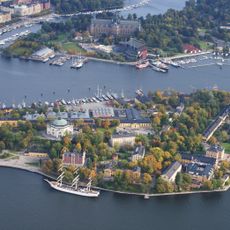
Only the bathmaster's wooden pavilion remains today; the floating cold bath was demolished and its piles pulled up after bathing was banned in 1923. The warm bath in the old smithy stayed in use until 1969, when the naval dockyard moved to Muskö. The site lies on the eastern shore of Skeppsholmen, near the water.
Only the bath attendant's small wooden pavilion survives today; the floating cold bath was demolished and its pilings pulled up after bathing in the polluted water was banned in 1923. The warm bath in the old smithy stayed in use until 1969, when the naval dockyard moved to Muskö.
The community of curious travelers
AroundUs brings together thousands of curated places, local tips, and hidden gems, enriched daily by 93,404 contributors worldwide.