Drakenbergsområdet, Residential area in Hornstull district, Stockholm, Sweden
Drakenbergsområdet is a residential area near Hornstull on Södermalm in Stockholm, just south of Hornsgatan at numbers 107–123. Its nine building bodies in the Drakenberg block were built in the late 1960s and early 1970s to designs by architect Lars Bryde. Together with the Plankan block opposite, they show that the Million Programme also reached central Stockholm, not only the suburbs.
The area took its name from the Draken tavern, established by Melchior Schipman in 1669 near the first Liljeholmsbron bridge. This historical reference connects the location's past as a stopping point to the residential complex built there centuries later.
The name Drakenberg comes from the Draken tavern that Melchior Schipman opened here in 1669, when the first Liljeholmsbron was built as a floating bridge. Schipman had earlier run Källaren Draken in Gamla stan, at the corner of Österlånggatan and Drakens gränd, and brought the name with him. The tavern passed to Michael König in 1671 and to the sugar baker Niclas Voigtländer in 1674, then closed in 1681 after a bitter dispute between the two men.
The complex sits on the south side of Hornsgatan and is easy to reach by public transport. Visitors can walk through the area while staying close to bus stops and metro stations.
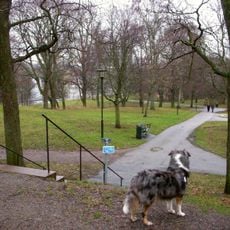
The Western Main Line railway ran through what is now Drakenbergsparken until 1929, when services shifted to the Årsta Bridge. This change left behind a green space where trains once passed through the city center.
The community of curious travelers
AroundUs brings together thousands of curated places, local tips, and hidden gems, enriched daily by 93,535 contributors worldwide.