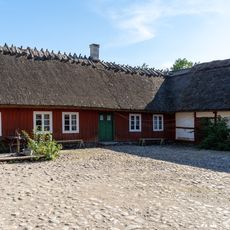
Gamla huset, Historic building on Waldemarsudde, Södra Djurgården, Stockholm, Sweden
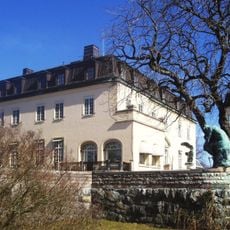
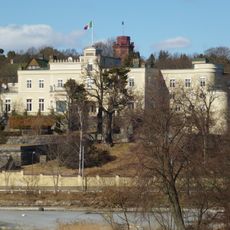
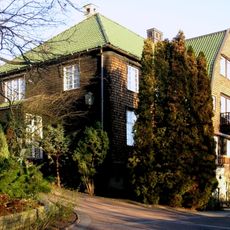
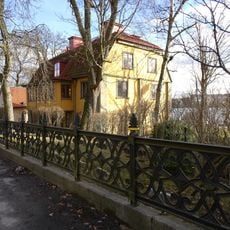
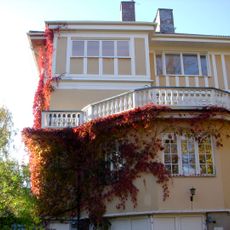
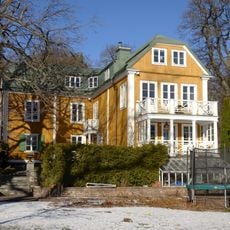
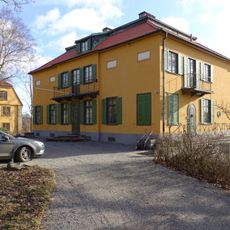
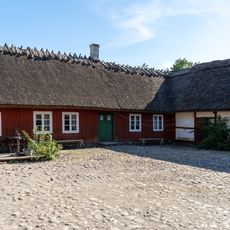
Gamla huset, also called Gula huset, is a building at Waldemarsudde on Södra Djurgården in Stockholm. Its oldest part is a parstuga probably built by commissioner Alström, who acquired Waldemarsudde in 1737. In the 1780s Carl Magnus Fris extended it as a summer residence, and in the mid-19th century shipowner Johan Bergman Olson added an upper floor with a mansard roof and a porch. At the end of the 19th century an open veranda facing south and an enclosed veranda facing north were added.
The oldest part is a parstuga, likely built by commissioner Alström, who acquired Waldemarsudde in 1737. In the 1780s Carl Magnus Fris extended it as a summer residence, and in the mid-19th century shipowner Johan Bergman Olson added an upper floor with a mansard roof and a porch. Around 1900 Prince Eugen used it as a summer home before buying the estate in 1899.
The house is also called Gula huset, the Yellow House, and its interior preserves traces of every rebuilding phase, from the 1730s parstuga to the glazed verandas of the late 19th century. Prince Eugen rented a gable room here in 1892, drawn by the evening light over the water, and used the house as his summer residence until his own building was finished.
Gamla huset stands on the Waldemarsudde estate on Södra Djurgården, reached by tram or bus toward Djurgården and then a short walk through the grounds. The building houses a museum, so check opening times before setting out. Prince Eugen's urn lies at the shore behind the house, a short walk from the entrance.
Prince Eugen died in 1947 and was the first member of the Swedish royal family to be cremated; his urn was buried by the shore behind Gamla huset, close to the building he had rented as a summer retreat from 1892.
The community of curious travelers
AroundUs brings together thousands of curated places, local tips, and hidden gems, enriched daily by 94,153 contributors worldwide.