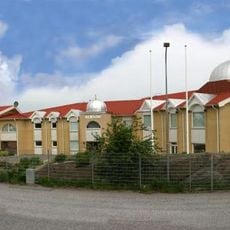
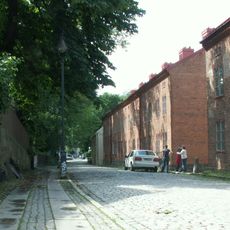
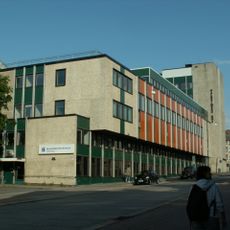
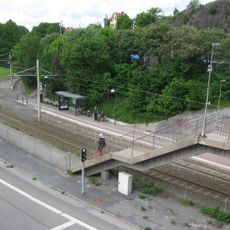
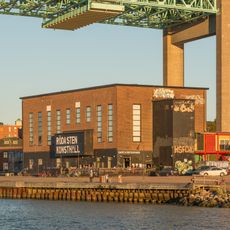
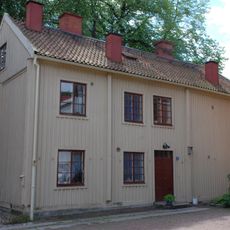
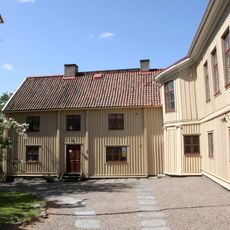
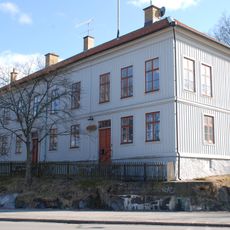
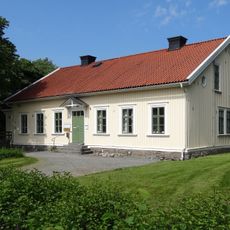
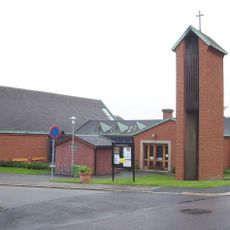
Sandarna, Residential area in Gothenburg, Sweden.
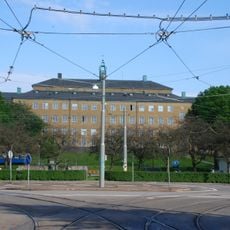
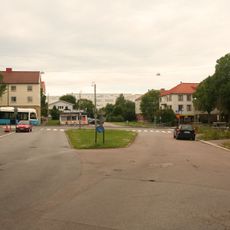
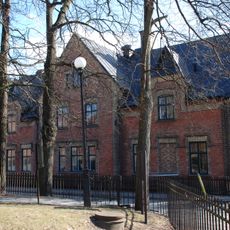
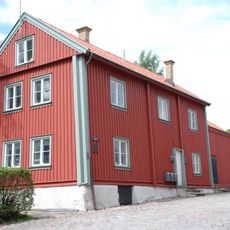
Sandarna, also called Sanna, is a district of Gothenburg built on a ridge rising from Kungsladugård and Klippan. Its defining feature is four-storey light-plastered functionalist blocks from the 1930s and 1940s, with rows of detached landshövdingehus at Sannaplan marking the transition from older Kungsladugård.
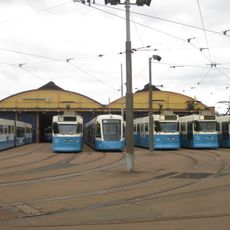
Sandarna gave its name to the Sandarna Culture, a period of the Swedish Stone Age dated to 8400–6000 BC. The settlement itself lay on the slope between Sannaskolan and the tram depot, and was excavated and published by Johan Alin in 1934. The district was built up in the 1930s and 1940s as a continuation of Kungsladugård, and since 1 January 2021 it belongs to the Centrum district.
The name Sandarna was given to a Stone Age culture of western Sweden after the settlement site found in the slope between Sannaskolan and the tram depot. The district's streets carry Gothenburg names, and Sannaplan marks the transition into Kungsladugård. Lars Hesslind's 2008 novel Älska mej din jävel draws on his childhood in the area's barnrikehus, the large-family housing of the 1930s and 1940s.
Regular bus services connect the neighborhood to other parts of the city, with stops along the main streets. The flat terrain and wide pathways make exploring on foot straightforward and pleasant.
The Stone Age settlement that gave its name to the Sandarna culture lay on the slope between Sannaskolan school and the tram depot, not in a museum. Excavations published by Johan Alin in 1934 documented the site, and the name Sandarna is still used for this period of the Swedish Stone Age.
The community of curious travelers
AroundUs brings together thousands of curated places, local tips, and hidden gems, enriched daily by 94,399 contributors worldwide.