Tomtebodaskolan, Educational institution in Tomteboda, Sweden
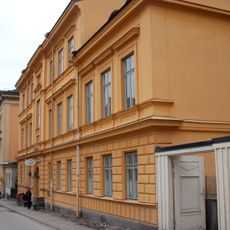
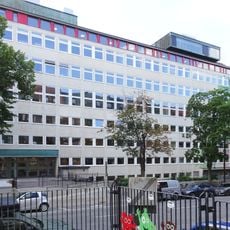
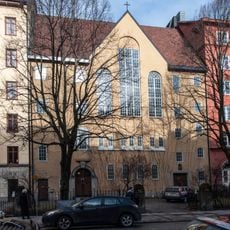
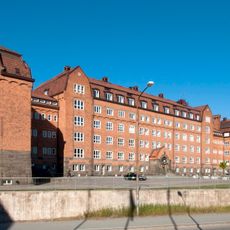
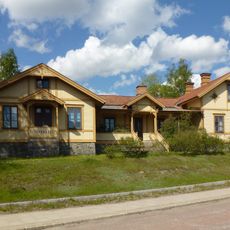
Tomtebodaskolan is a former school for visually impaired students on Tomtebodavägen in Tomteboda, Solna, north of Stockholm. Its main building was designed by Oskar Erikson of the Överintendentsämbetet and opened on 1 September 1888, built for 415,000 kronor on a 15-hectare state plot with a forest park. Two annex buildings by Erikson followed in 1898, and the gymnasium and swimming hall along the western side were added in 1963 to drawings by Carl Grandinson.
The Institute for the Blind was separated from the Manilla institute in January 1879, after the Riksdag granted funding in 1878. It opened in rented rooms at Nybrogatan 27 C before moving on 1 September 1888 to buildings designed by Oskar Erikson, costing 415,000 kronor. The school closed in 1986 and became a resource centre; the activity moved to Campus Konradsberg in 2004.
The school's name comes from Tomteboda, the Solna district where the purpose-built institute opened in 1888. Pupils received vocational training alongside reading lessons, in crafts such as basket making, brush binding and weaving; boys were often sent to a handicraft school in Kristinehamn, girls learned household work. A preschool building was added in 1899, after blind education became compulsory in 1896.
The building is on Campus Solna and is visible from the outside, but public access inside is not available. Walking around the campus area gives a good sense of the site, and daytime is the best time to visit.
From 2005 to 2018, the main building housed the European Centre for Disease Prevention and Control, an EU agency that tracked health risks across Europe. A building once built for children with visual impairments later becoming home to a continent-wide health agency is a rare turn for any site.
The community of curious travelers
AroundUs brings together thousands of curated places, local tips, and hidden gems, enriched daily by 94,097 contributors worldwide.