Stenen i Grönan dal, Rock formation in Jämtland, Sweden
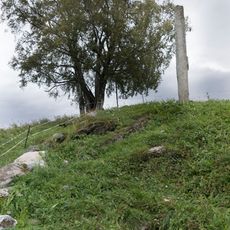
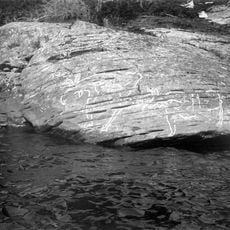
Stenen i Grönan dal is a conical stone block about one metre high on an open mountain heath by Skurdalssjön, roughly five kilometres north of Storlien near the Swedish-Norwegian border. It has no runes, but a vertical line crossed by at least four horizontal lines, with many small strokes between them, and is covered with personal initials and bomärken, mostly 17th-century graffiti.
The stone is mentioned in medieval writings by Olaus Magnus and later by Olof Rudbeck and Abraham Hülphers, though its age is unknown. Erik Dahlbergh included it in Suecia antiqua et hodierna (printed 1716) as the only Jämtland subject in that work, chosen over the Frösön runestone and Brunflo's church. In 1612 Johannes Messenius first linked the Jämtland stone with the prophecy poem, whose older Danish variants are known.
The stone is tied to a widely spread prophecy in verse: as long as the stone stands in Grönan dal, the land endures; when it falls, the end is near. The verse is first documented in a text by Jesper Marci, superintendent of Mariestad, and closely resembles a Danish inscription recorded in 1502. In 1612 Johannes Messenius was the first to link the Jämtland stone with the poem.
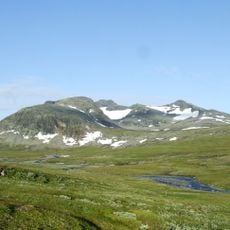
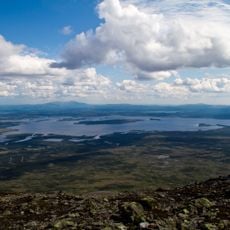
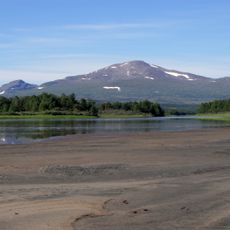
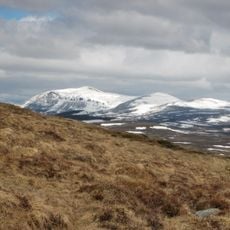
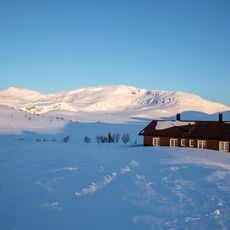
The stone stands on open mountain heath by Skurdalssjön, about five kilometres north of Storlien, close to Skurdalsröset border marker 161 and the Swedish-Norwegian border. An old trail passes it on the way towards the pass at Skurdalsporten, and the St. Olaf's Way pilgrim route has run here since the 1000s. Wear footwear for bare, exposed heath.
In earlier times, reaching this rock required a three-day journey from Frösön, highlighting its remote location. Today this extreme distance is easy to underestimate when arriving via modern trails and shorter travel times.
The community of curious travelers
AroundUs brings together thousands of curated places, local tips, and hidden gems, enriched daily by 94,136 contributors worldwide.