Yttersta Tvärgränd, living street on Södermalm, Stockholm, Sweden
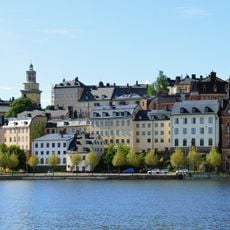
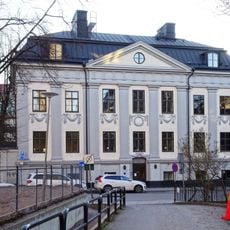
Yttersta Tvärgränd is a 140-metre-long street on Södermalm, running from Skinnarviksparken in the north to Ringvägen in the south. The blocks on either side are named Kaninen Minsta to the west and Haren to the east. The preserved buildings are mainly 18th- and 19th-century residential houses, including numbers 2 and 5 from 1755, number 3 from 1765 and number 9 from 1769.
The street received its current name in 1961 but has been known since the early 1600s as the westernmost crossway of the area. Its original length extended to Krukmakargatan until the construction of Ringvägen shortened it in the mid-20th century.
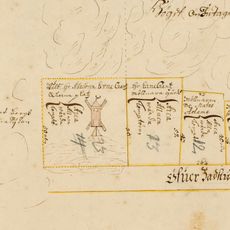
The name Yttersta Tvärgränd, adopted in 1961, marks the westernmost of the cross streets laid out from Hornsgatan. In Holms tomtbok of 1679 the lane appears under several names, including Ytterste Twärgatan and Twär gata som Stannar I Berget. The preserved 18th- and 19th-century houses have been used as a film set for several versions of Anderssonskans Kalle.
The lane runs 140 metres from Skinnarviksparken down to Ringvägen. From its northern end, stairs lead up to Skinnarviksberget, the inner city's highest natural hill at 53 metres above sea level. The surface is uneven and slopes, so wear sturdy shoes.
The preserved 18th- and 19th-century setting drew film crews shooting several versions of "Anderssonskans Kalle". The houses at numbers 2 and 5 date from 1755, number 3 from 1765 and number 9 from 1769; numbers 7 and 10 were built in 1852 with loans from the Fattigbyggnadsfonden.
The community of curious travelers
AroundUs brings together thousands of curated places, local tips, and hidden gems, enriched daily by 95,037 contributors worldwide.