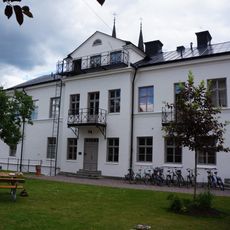
Archbishop's Palace of Uppsala, Religious residence in Uppsala, Sweden.
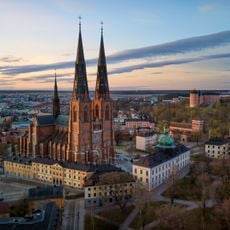
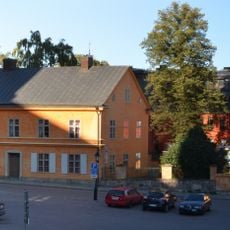
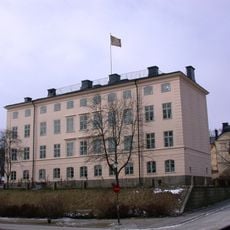
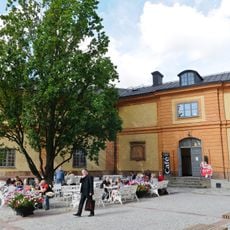
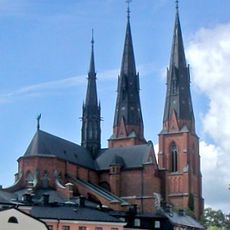
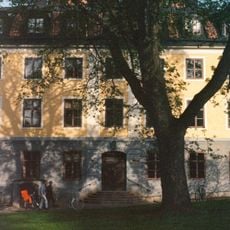
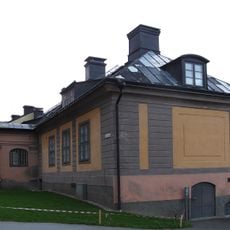
The Archbishop's Palace (Ärkebiskopsgården) is the official residence of the Lutheran Archbishop of Uppsala, designed by Carl Hårleman and completed in 1744. The main building, with two wings added in 1740 by Johan Körner, incorporates medieval cellars and foundations from the 14th-century Dean's house. It faces the University Park, west of the river, near Uppsala Cathedral.
The current building was completed in 1744 and replaced medieval fortifications that had served as residences for Catholic archbishops since the 14th century. The new structure reflected changes in Swedish religious life during the Protestant Reformation.
The palace has been the archbishop's seat since 1691, when the medieval dean's house on this site became the residence. The street name Nathan Söderbloms plan and Bror Hjorth's 1993 statue of Archbishop Nathan Söderblom, Nobel Peace Prize laureate, mark the spot. The lower floors are used for representation, while the third floor is the archbishop's private home.
The building is centrally located in Uppsala near other major religious sites such as the cathedral and cathedral museum. Public access to the interior is limited since it functions as an official administrative center, but the exterior is easily viewed from surrounding streets.
Archaeological excavations in the 1880s uncovered remains of the medieval fortress structure beneath University Hall and University Park. These findings show how layers of religious buildings have occupied this spot over centuries.
The community of curious travelers
AroundUs brings together thousands of curated places, local tips, and hidden gems, enriched daily by 94,564 contributors worldwide.