Uppsala Cathedral, Lutheran cathedral in Uppsala, Sweden
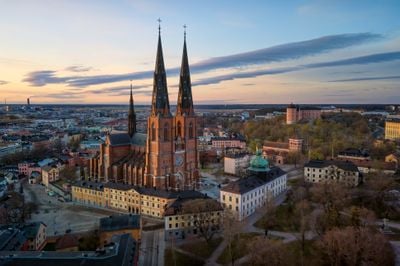
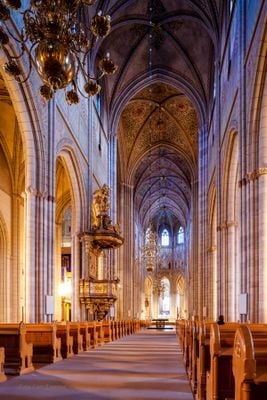
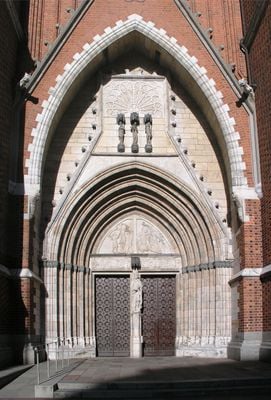
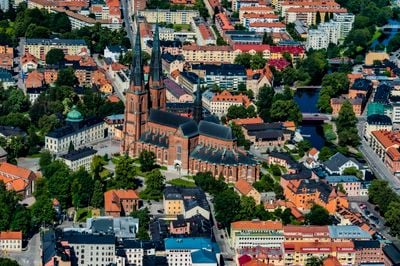
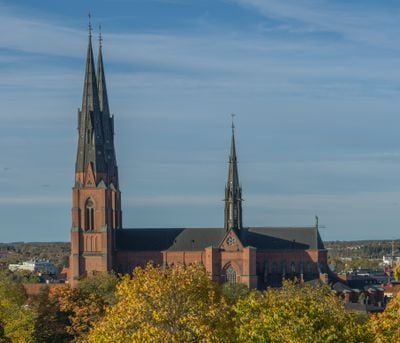
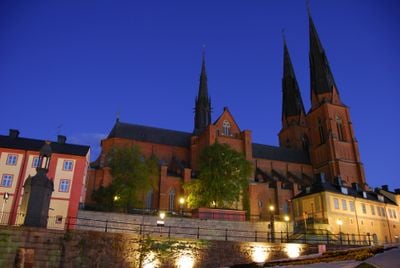
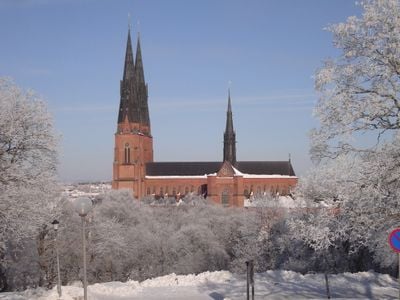
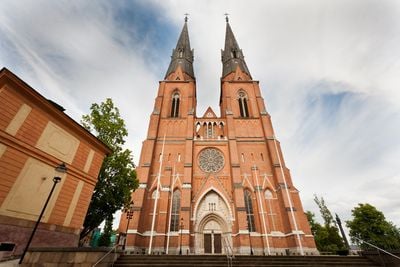
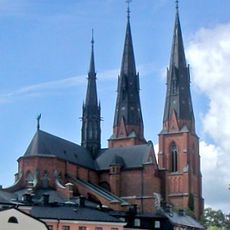
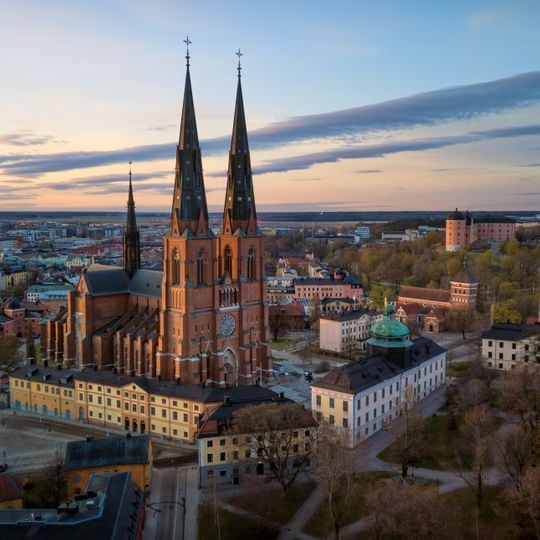
Uppsala Cathedral is a five-nave, cross-shaped Brick Gothic church built of brick with Gotland limestone pillars and details. Its twin west towers, 118.7 metres tall, are capped by steep dark spires, and a shorter spire rises on the left. The interior has pointed arches, a ribbed vault ceiling painted with foliate patterns, and an ornate wooden pulpit with gilded figures.
Construction began in 1272 or 1273 under an anonymous French architect, after Pope Alexander IV authorised the move from Old Uppsala in 1258. Étienne de Bonneuil arrived in 1287 and continued the same plans. The cathedral was consecrated in 1435, and the west towers were built between 1470 and 1489. A fire in 1702 destroyed much of the interior, and Carl Hårleman added low helms in 1735.
The cathedral is dedicated to Saint Lawrence, Saint Eric and Saint Olaf, and its name comes from the see moved here from Gamla Uppsala in 1273. It holds the reliquary of Saint Eric and a shrine of Saint Birgitta. Between 1441 and 1719 all but three Swedish monarchs were crowned here, and Gustav Vasa and Johan III are buried in its chapels.
Visitors can explore the Treasury Museum in the north tower to view medieval church textiles and historical pieces, open throughout the week. The interior is accessible and offers plenty of space to wander, though certain areas may be restricted during active services.
The cathedral's Treasury Museum, in the north tower since the 1970s, holds medieval church textiles and older furnishings. Among the treasures is the gilded shrine with the relics of Erik the Holy, kept in a side chapel near the high altar. The largest of the five bells, Storan, weighs 7,360 kg and is Sweden's heaviest church bell.
The community of curious travelers
AroundUs brings together thousands of curated places, local tips, and hidden gems, enriched daily by 93,359 contributors worldwide.