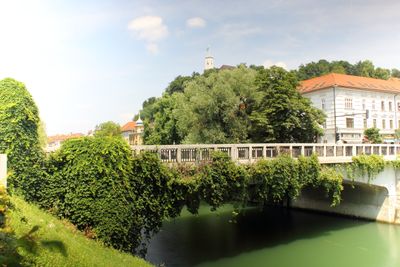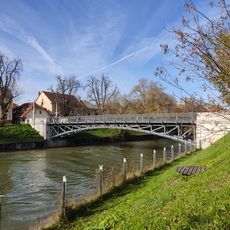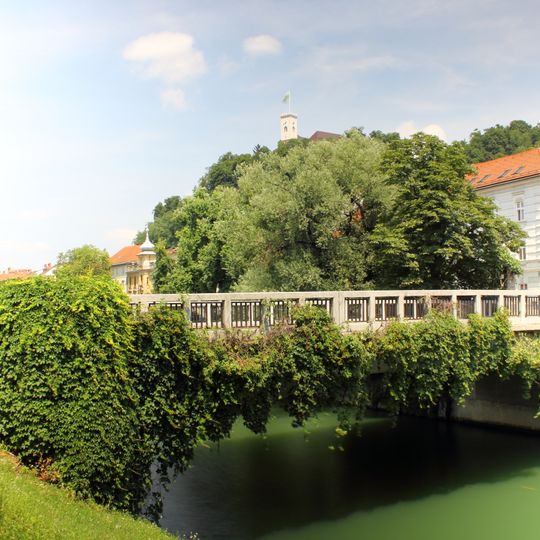
St. James's Bridge, Neo-Biedermeier bridge in Ljubljana, Slovenia
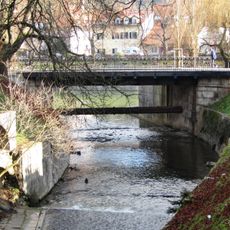
St. James's Bridge is a reinforced concrete structure that spans the Ljubljanica River, connecting Zois Street with Karlovac Street in the city center. Its distinctive cantilever design allows the span to cross the river without intermediate supports in the water.
Construction was completed in 1915 under the design of engineer Alois Král and architect Alfred Keller. It replaced an earlier wooden bridge from 1824 that had served the city for nearly a century.
A plaque from 1954 marks the site of a medieval watermill that stood here in the 15th century before being destroyed. This marker shows how the bridge connects modern Ljubljana to its forgotten past and the events that shaped the city.
The bridge carries significant traffic through the southern downtown area, especially during peak hours. It is best viewed during quieter times of the day when you can observe the structure and the river views without vehicular congestion.
The design incorporates late-Secession and Viennese architectural elements from the early 20th century, reflecting the time when Ljubljana was part of the Austro-Hungarian sphere. These artistic touches are visible in the concrete forms and proportions, blending engineering with aesthetic intention.
The community of curious travelers
AroundUs brings together thousands of curated places, local tips, and hidden gems, enriched daily by 92,787 contributors worldwide.