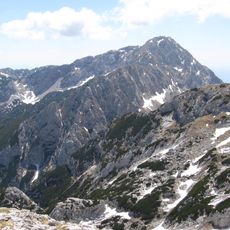
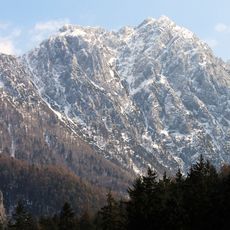
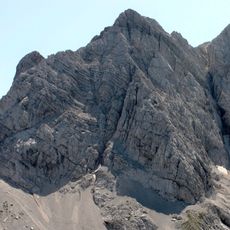
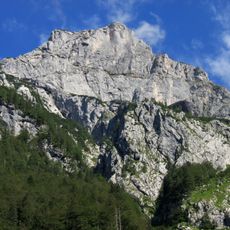
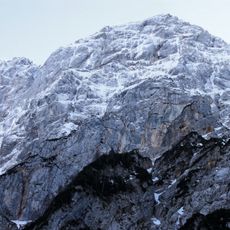
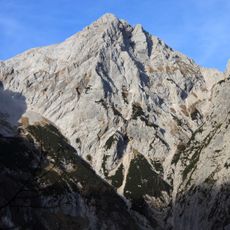
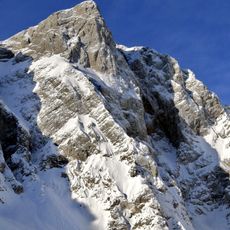
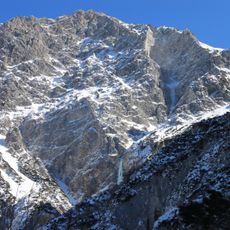
Skuta Glacier, Alpine glacier in Kamnik-Savinja Alps, Slovenia
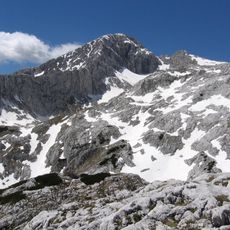
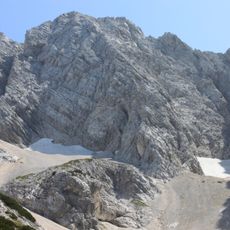
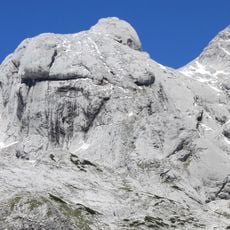
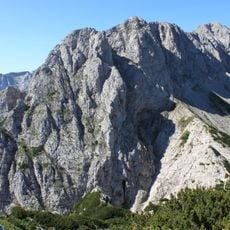
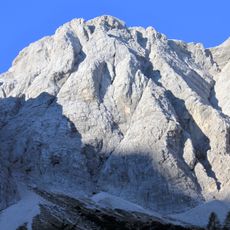
Skuta Glacier is a small ice body in a north-west-facing limestone cirque beneath Mount Skuta in the Kamnik-Savinja Alps. It lies between 2,020 and 2,120 metres and covered about 1.5 hectares in 2020. In 2006 its ice averaged 7 metres thick, reached nearly 12 metres, and held just under 80,000 cubic metres.
The glacier formed during the Little Ice Age, between the mid-14th and mid-19th centuries, in the upper part of the much larger Pleistocene Jezersko Glacier, which carved the Ravenska kočna valley. Its first documented mention dates to 1913, when 15-year-old student Janko Petrič died after falling into crevasses more than 10 metres deep. Systematic measurements by the Anton Melik Geographical Institute began in 1946.
Since 1946 the Anton Melik Geographical Institute ZRC SAZU has measured the glacier with stakes set into the ice and rock, recording how far the margin retreats each melt season. From 1962 photographs were taken from a fixed spot known locally as "At the Larch". Since 1976 a panoramic camera has recorded the ice, and the data feed international glacier exchange.
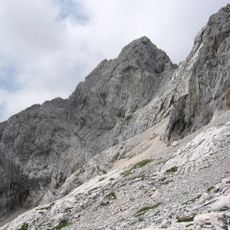
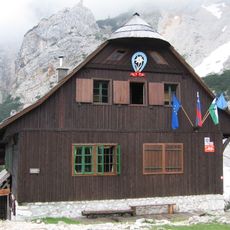
The easiest approach is from the Kranjska koča na Ledinah hut, about an hour on a marked path; the glacier comes into view a few minutes above the hut where the ground flattens at the lower edge of Ledine. The final stretch crosses scree, and the lower glacier edge has a gentler slope of 25°–30°. From Zgornje Jezersko the routes via the Slovene path, Žrelo or the hunting path take 2.30–2.45 hours.
The glacier sits in a shaded cirque that opens northwest toward Jezersko, and avalanches from surrounding gullies feed it snow. In early melt season of 2013 a large rockfall covered part of its southwestern surface, the biggest there since 2002. Since 1976 it has been photographed with a panoramic camera for the Anton Melik Geographical Institute.
The community of curious travelers
AroundUs brings together thousands of curated places, local tips, and hidden gems, enriched daily by 93,650 contributors worldwide.