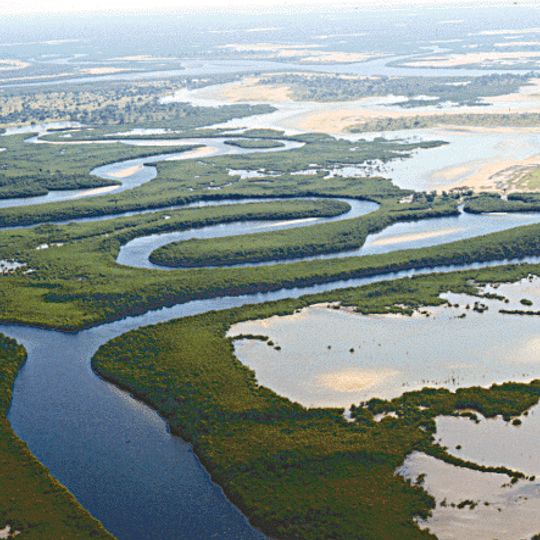
Saloum Delta National Park, Wetland national park in western Senegal.
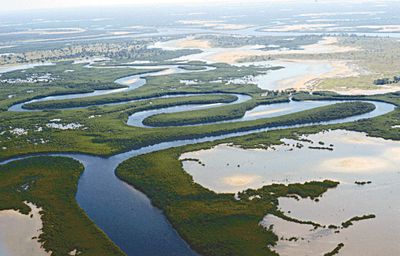
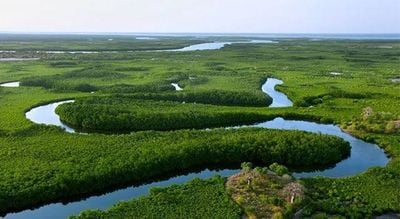
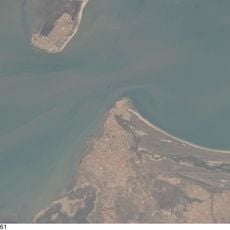
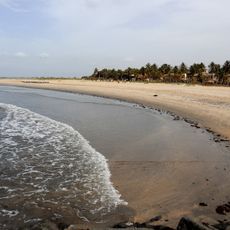
Saloum Delta National Park is a wetland in western Senegal where the Saloum River meets the Atlantic Ocean, forming a broad network of mangrove forests, salt marshes, tidal channels, and small islands. It is also a Ramsar site, recognized for its role in protecting the waterways and the wildlife that depends on them.
The park was created in 1976 and added to the Ramsar list of protected wetlands in 1984. In 2011 it was designated a UNESCO World Heritage Site, which brought wider recognition to this part of the Senegalese coast.
Fishing boats move through the channels every morning, and it is common to see locals gathering shellfish along the mudflats by hand. The communities living along the waterways have shaped this landscape over many generations through small-scale, daily use of the water.
Organized trips from Dakar are the most common way to reach the area, and many visitors stay in small lodges on the islands within the delta. The dry season, which runs roughly from November to May, tends to be the most practical time to go, as paths are more accessible and boat tours run more smoothly.
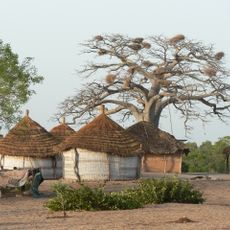
Scattered across the delta are large mounds made entirely of discarded shells, built up over centuries by people living and eating along the water. Some of these mounds are now home to small villages, meaning that people today live on ground that was created by their ancestors.
The community of curious travelers
AroundUs brings together thousands of curated places, local tips, and hidden gems, enriched daily by 91,884 contributors worldwide.