Mureybet, Archaeological settlement mound in Al-Raqqah, Syria.
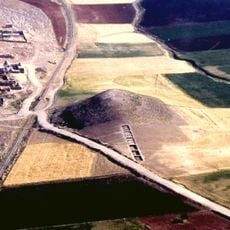
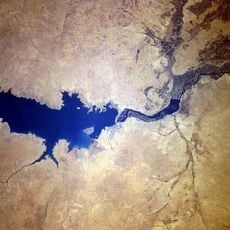
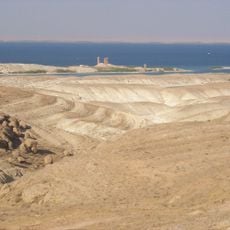
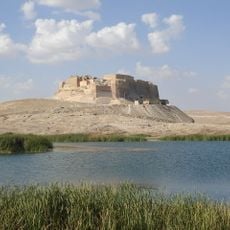
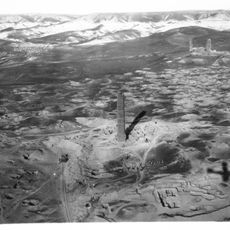
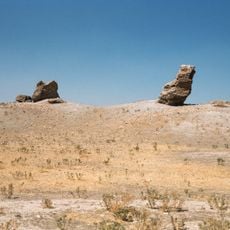
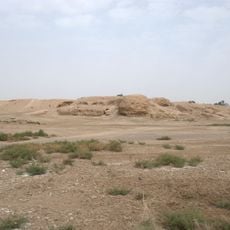
Mureybet is a submerged settlement mound on the western shore of the Euphrates in Al-Raqqah Governorate, Syria. The mound spanned 75 meters in diameter and rose to 6 meters above the former river level before construction of the Tabqa Dam submerged it beneath Lake Assad.
People lived here continuously between 10,200 and 8,000 BCE, a period when hunters and gatherers began settling down and cultivating plants for the first time. Archaeologists worked at this location from 1964 until 1974, documenting several layers from different centuries before the impounded waters of the Euphrates covered all traces.
Researchers named the location after a small village on a terrace along the Euphrates, now lost beneath the waters. Findings include flint and basalt tools as well as circular stone-walled dwellings where occupants first gathered and began storing wild cereals.
The location lies entirely beneath Lake Assad and cannot be visited since the dam was completed in the nineteen seventies. All recovered objects are now held in museums or research collections outside the region.
This location gave its name to an entire epoch and serves as the model example for Pre-Pottery Neolithic A in the Levant. Researchers discovered here traces of early use of wild cereals, long before people began systematically sowing and harvesting grain.
The community of curious travelers
AroundUs brings together thousands of curated places, local tips, and hidden gems, enriched daily by 91,253 contributors worldwide.