Basilica Cistern, Byzantine cistern in Fatih, Istanbul, Turkey
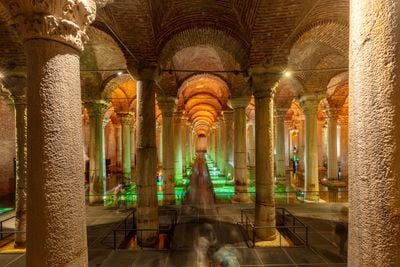
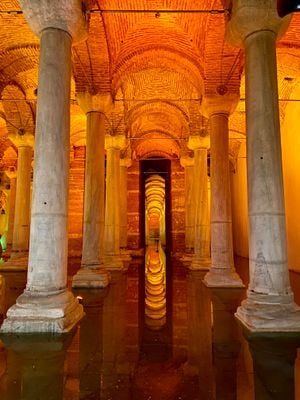
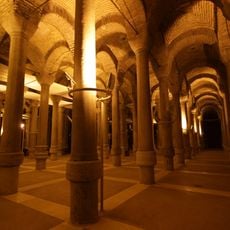
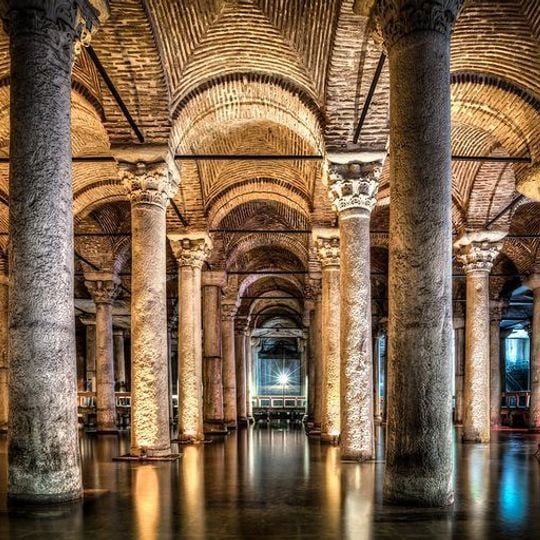
The Basilica Cistern is an underground Roman water reservoir beneath the Fatih district of Istanbul, extending roughly 138 by 65 meters. A total of 336 marble columns stand in regular rows and carry vaulted brick ceilings above shallow water.
The cistern was built in the 6th century under Emperor Justinian I, with construction dated to 526–527 in one source. It was called Basilica because it lay beneath the Stoa Basilica, a public square on the First Hill of Constantinople. Historical texts claim 7,000 enslaved people took part in the work.
The two Medusa heads serve as column bases and were brought here from older temples. They lie sideways and upside down, showing how Byzantine builders reused Roman elements.
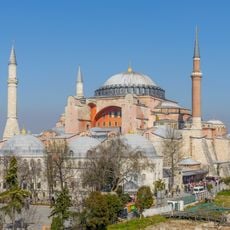
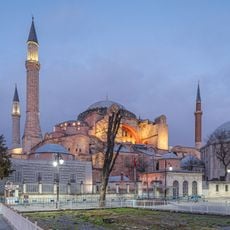
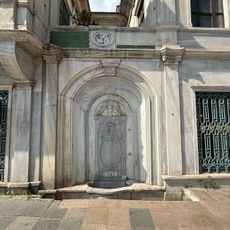
The entrance sits directly opposite Hagia Sophia and is easy to find. Raised wooden walkways lead through the interior, allowing you to walk among the columns without touching the water.
The cistern's water arrived from the Eğrikapı distribution centre in the Belgrad Forest, 19 km north, carried by the 971-metre Valens Aqueduct and the 115-metre Mağlova Aqueduct built under Justinian. In 1565 the French traveller Petrus Gyllius was rowed between the columns and saw fish beneath the boat.
The community of curious travelers
AroundUs brings together thousands of curated places, local tips, and hidden gems, enriched daily by 92,287 contributors worldwide.