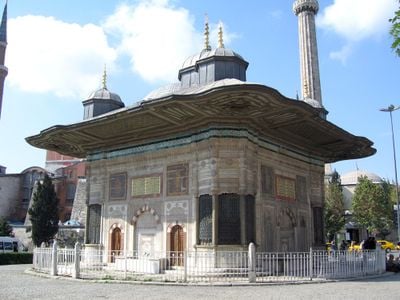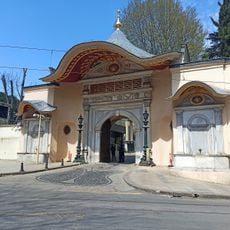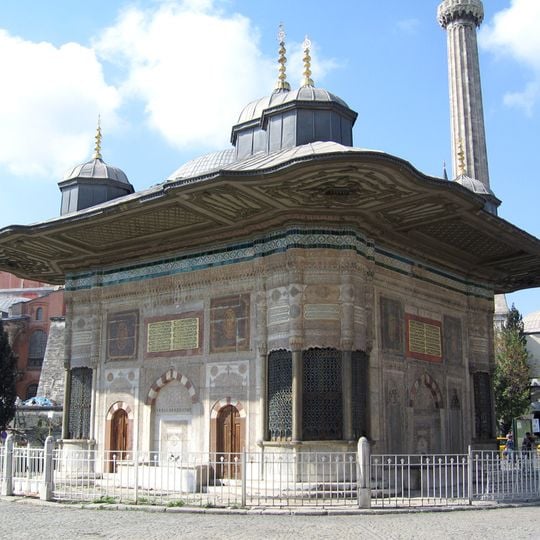
Fountain of Ahmed III, Ottoman rococo fountain at Topkapi Palace entrance, Istanbul, Turkey
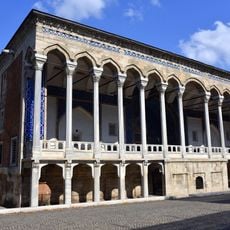
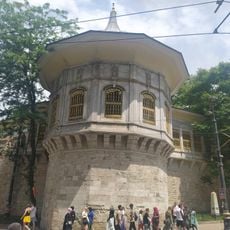
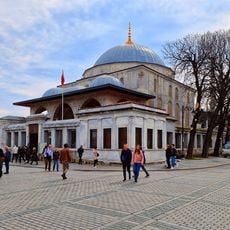
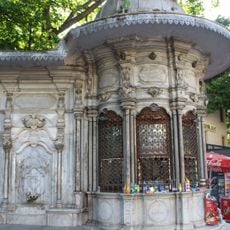
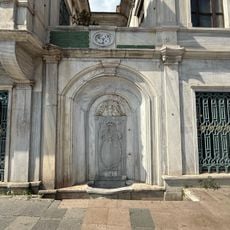
The Fountain of Ahmed III is a square structure with five small domes, standing at the corner where two streets meet in Fatih. Its four sides feature ornate facades with niches that hold water spouts and drinking basins for public use.
Built in 1728 under Sultan Ahmed III's rule, it replaced an earlier Byzantine water source called Perayton that once stood at the same location. This construction was part of a broader Ottoman renewal of Istanbul's public spaces during the sultan's reign.
The inscriptions covering the fountain are poems about water, written in elegant calligraphy across blue and red tiles. These verses show how deeply water and its spiritual meaning were woven into daily Ottoman life and design.
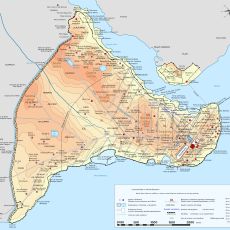
The fountain sits at the corner of Soğuk Çeşme Sokak and Kabasakal Cadde, making it easy to spot while walking through the Fatih district. The area is accessible during daylight hours and well-positioned for visitors exploring the larger neighborhood around the palace.
The structure appeared on Turkish 10 lira banknotes between 1947 and 1952, marking its importance as a national symbol. Its presence on currency made it one of the most recognized monuments in Turkey during that period.
The community of curious travelers
AroundUs brings together thousands of curated places, local tips, and hidden gems, enriched daily by 60,000 contributors worldwide.