Topkapı Palace, Ottoman imperial palace and museum in Eminönü, Turkey
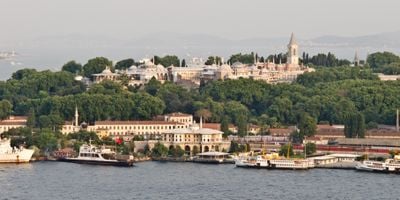
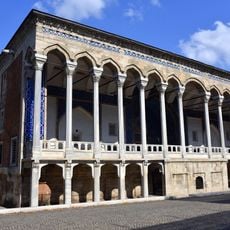
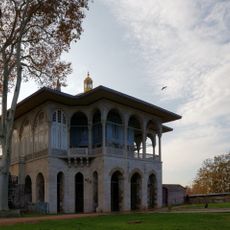
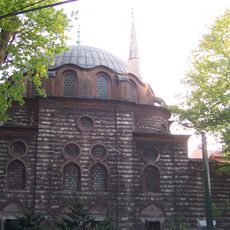
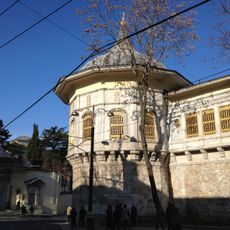
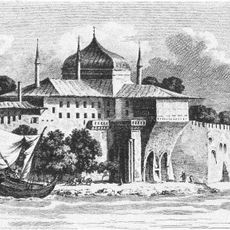
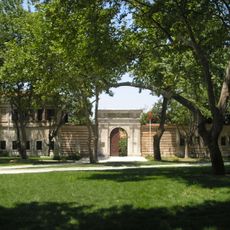
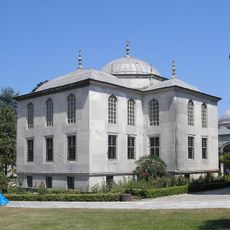
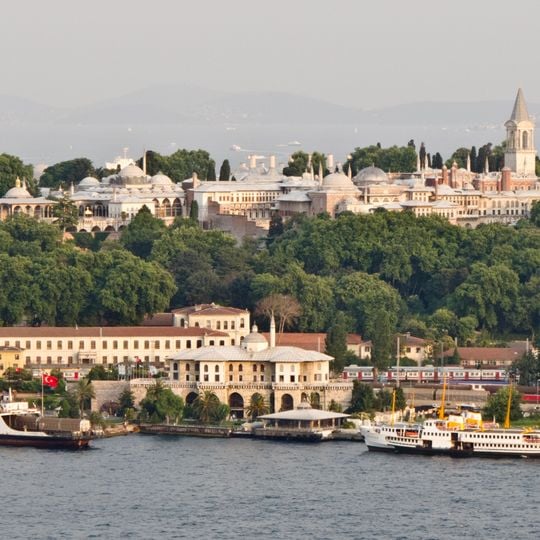
The Topkapı Palace stands on the Seraglio Point, its pale-yellow lower range and white stone domed buildings rising among trees above the water. A slender tower with a steep conical roof marks the complex, entered through a gatehouse with two round towers and a pointed arch bearing gold Arabic inscription. Inside are four main courtyards and hundreds of rooms.
Sultan Mehmed II ordered the construction of this residence beginning in 1459, and it served as the administrative center and home for Ottoman rulers until the mid 19th century. The court later moved to European-style palaces along the Bosphorus, and the grounds were eventually opened as a museum.
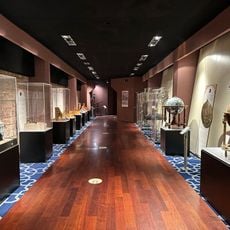
The palace's name comes from Topkapı, 'Cannon Gate', transferred in the 18th century from a seaside palace destroyed by fire. The Hırka-i Saadet chamber, holding the Prophet's cloak, was maintained yearly and visited by the sultan and his family during Ramadan. The museum also keeps illuminated manuscripts such as the Topkapı manuscript.
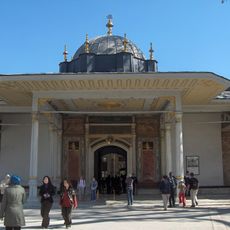
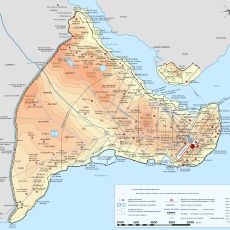
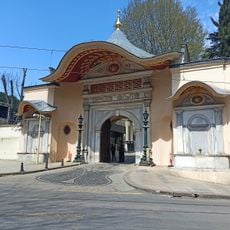
The monumental entrance is the Bâb-ı Hümâyûn (Gate of the Sultanate) behind Hagia Sophia, leading into the first courtyard. The palace is enclosed by land walls built by Mehmed II and Byzantine sea walls. The Harem is entered separately from the central route through the courtyards.
The palace's monumental entrance, the Bab-ı Hümayun, carries an inscription by Ali bin Yahya Sofi in thuluth script with verses 45–48 of the Surah al-Hijr. The text dates the gate's construction to Ramadan 883 AH (November–December 1478), under Mehmed the Conqueror. Tuğras of Mahmud II and Abdülaziz inside record later repairs.
The community of curious travelers
AroundUs brings together thousands of curated places, local tips, and hidden gems, enriched daily by 92,077 contributors worldwide.