Greek Theatre of Miletus, Ancient Greek theatre in Miletus, Turkey
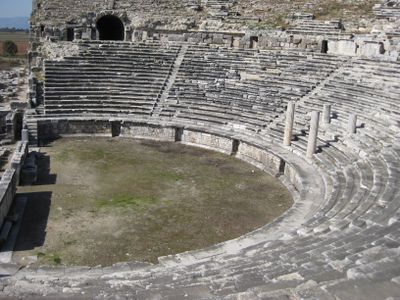
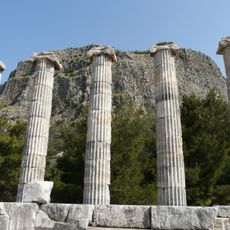
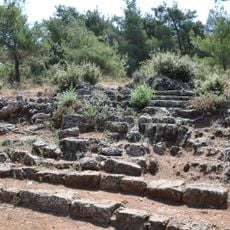
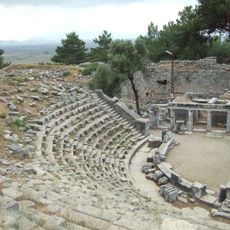
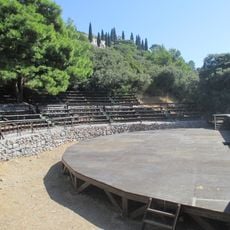
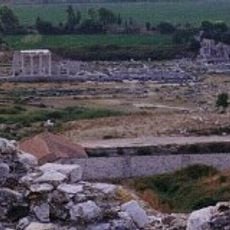
The Greek Theatre of Miletus is an ancient performance venue where the seating rises in a semicircular arc up the slope. The structure still shows the passages and chambers that once guided thousands of spectators to their places.
The venue was built in the Hellenistic period as a space for dramatic performances. During Roman rule, it was modified to serve different kinds of entertainment and public gatherings.
The theatre served as a central performance venue in Miletus, an influential Ionian city that produced philosophers Thales, Anaximander, and Anaximenes.
Visitors can explore the ruins along several routes, with stone paths and stairs leading to different areas. Early morning visits work best, as the light shows the structural details well and the heat is not yet intense.
The theatre was part of a city famous for early philosophers and shows how gathering spaces connected to intellectual life. Walking through it today reveals how such buildings fit into urban planning and shaped daily routines.
Location: Aydın Province
GPS coordinates: 37.53059,27.27574
Latest update: December 6, 2025 19:02
Ancient Greek theaters demonstrate skilled architecture developed between the 5th and 3rd centuries BC. Built into hillsides, these structures utilized natural terrain to create stone seating and enhance acoustic performance. They served as venues for tragedies and comedies, as well as gathering spaces during religious festivals and panhellenic games. Most theaters are located in mainland Greece and on the islands, with notable examples such as Epidaurus in Argolis, renowned for its exceptional sound clarity, or the Theater of Dionysus in Athens, considered the cradle of Western theater where works by Aeschylus, Sophocles, and Euripides were performed. Additional sites are found across the eastern Mediterranean, including Miletus in present-day Turkey and Philippi in northern Greece. Some of these structures were modified during the Roman period, such as the Odeon of Herodes Atticus, which incorporated Roman architectural features while maintaining its function as a performance space. Many of these venues, which could seat between 5,000 and 18,000 spectators, remain important remnants of ancient Greek social and cultural life.
Tunnel of Eupalinos
35.5 km
Didyma
16.3 km
Cave of Zeus, Aydın
20.8 km
Pythagoreion
34.3 km
Myus
15.3 km
Temple of Athena
14.5 km
Dilek Peninsula National Park
10.5 km
Panionium
20.6 km
Ladies Beach, Kuşadası
35.1 km
İlyas Bey Mosque
501 m
Priene Synagogue
14.4 km
Temple of Apollo at Didyma
16.3 km
Akbük Public Beach
21.6 km
Kellibaron Monastery
25.1 km
Melia
20.5 km
Greek Theatre of Priene
14.5 km
Archaeological Museum of Pythagoreio
34.6 km
South Agora of Miletus
393 m
North Agora of Miletus
365 m
Alexandreion (Priene)
14.3 km
Old castle of Pythagoreion
34.4 km
Baths of Faustina
273 m
Ionic Stoa in Miletus
431 m
Poseidon Altar
21 km
Theatre of the Pythagoreion
35.2 km
Stadium Miletus
304 m
Sanctuary of Egyptian Gods
14.5 km
Church of Ai-Giannaki, Ano Vathy
35.3 kmVisited this place? Tap the stars to rate it and share your experience / photos with the community! Try now! You can cancel it anytime.
Discover hidden gems everywhere you go!
From secret cafés to breathtaking viewpoints, skip the crowded tourist spots and find places that match your style. Our app makes it easy with voice search, smart filtering, route optimization, and insider tips from travelers worldwide. Download now for the complete mobile experience.
A unique approach to discovering new places❞
— Le Figaro
All the places worth exploring❞
— France Info
A tailor-made excursion in just a few clicks❞
— 20 Minutes