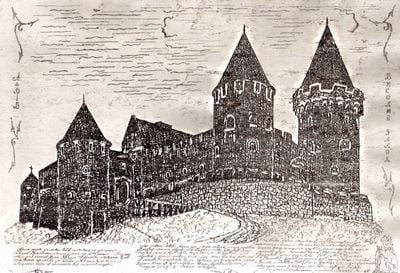
Lviv High Castle, Medieval castle ruins on Castle Hill, Lviv, Ukraine.
Lviv High Castle consists of stone fortification ruins sitting on a hilltop 413 meters above sea level, forming the city's highest vantage point. The remains of the fortress and a television tower overlook the entire city and its surroundings.
Prince Lev Danylovych built a wooden-and-earth stronghold on Zamkova hora in the 13th century; it was razed in 1259 on Burundai's order and rebuilt in 1270. After a fire in 1340, a stone castle rose at the end of the 14th century, serving as a royal residence and prison. Cossacks under Maksym Kryvonis took it in 1648, Swedish troops damaged it in 1704, and the fortifications were abandoned in 1777. Most of the walls were dismantled in the 19th century, and the surviving fragment is the southern wall of the outer bailey between the main gates.
The name High Castle comes from the hilltop site, while the Lower Castle stood in the city centre where the National Museum now is. Stanisław Lem titled his 1966 novel about a Lviv childhood "Wysoki Zamek"; censorship kept the city's name out of the book. A newspaper also bears the name.
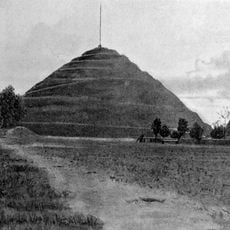
The surviving wall fragment is the southern wall of the castle's outer bailey, the courtyard between the main outer and inner gates. The site lies on Zamkova hora north of the city centre, and the Lublin Union mound (built 1869–1900) now covers the castle's former core. A 192-metre lattice television mast erected in 1957 stands on the ridge.
The surviving wall fragment is the southern wall of the castle's outer bailey, the courtyard between the main outer and inner gates. Most of the castle was quarried away in the 19th century, and stone from it was used to build the townhouse at Lychakivska Street No. 3.
The community of curious travelers
AroundUs brings together thousands of curated places, local tips, and hidden gems, enriched daily by 94,101 contributors worldwide.