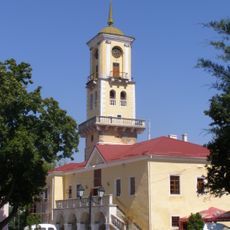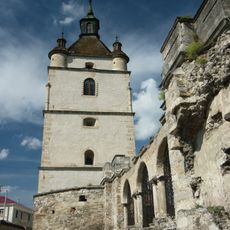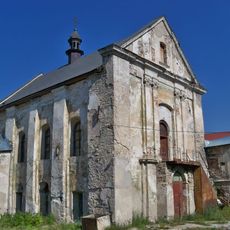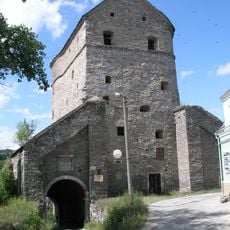
Armenian Well in Kamianets-Podilskyi, Medieval water well in Kamianets-Podilskyi, Ukraine
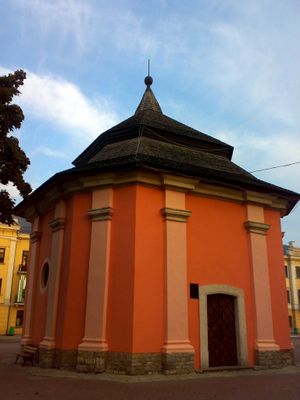
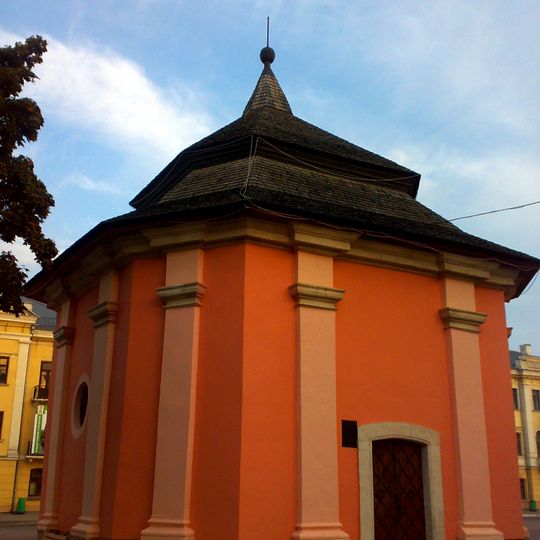
The Armenian Well is an octagonal baroque pavilion in the centre of Kamianets-Podilskyi's Old Town, 12×12 m in plan and 14 m tall, with 8 m pilastered walls and a shingled hipped roof. Inside, a shaft about 5 m wide is cut over 30 m deep into solid rock. A door opens on the east side; three round windows about 1 m across pierce the other walls.
Armenians settled in Kamianets-Podilskyi from the 11th century, and by the 17th century 1,200 Armenian families lived in the city. According to legend, the wealthy merchant Narses donated money for a water supply, but most of it disappeared. In 1638 King Władysław IV ordered the Armenians to fulfil the donor's will, and the well was cut in the solid rock, probably then. In 1672 the city commandant Jan de Witte built a stone pavilion over it.
Some researchers, such as local historian Mykola Petrov, consider the name "Armenian Well" unfounded and propose "City Well", the name recorded on the 1773 town plan as Studnia Miejska. The building later served as a city warehouse and a film-distribution store before becoming an exhibition hall of the Kamianets-Podilskyi state historical museum-reserve.
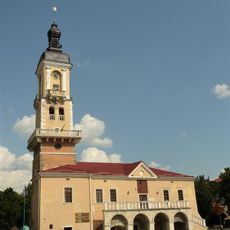
The well is located near Town Hall and is easily accessible from the city center. Visitors can view the construction from outside and understand how historical water systems worked.
Despite the careful construction, the well produced salty water due to the geological layers beneath the ground. This made it less useful for daily water supply but adds a puzzling chapter to its story.
The community of curious travelers
AroundUs brings together thousands of curated places, local tips, and hidden gems, enriched daily by 94,712 contributors worldwide.