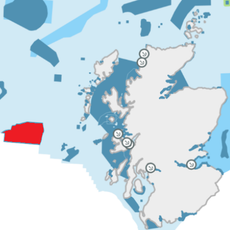
Rockall, Granite rock in Outer Hebrides, United Kingdom.
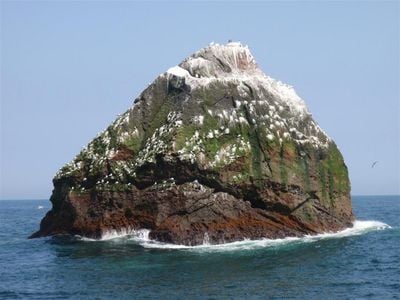
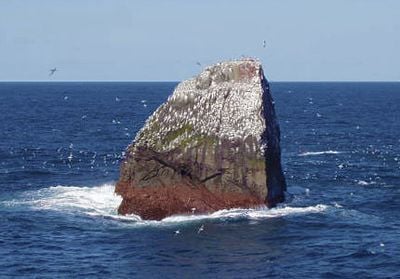
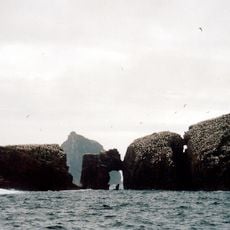
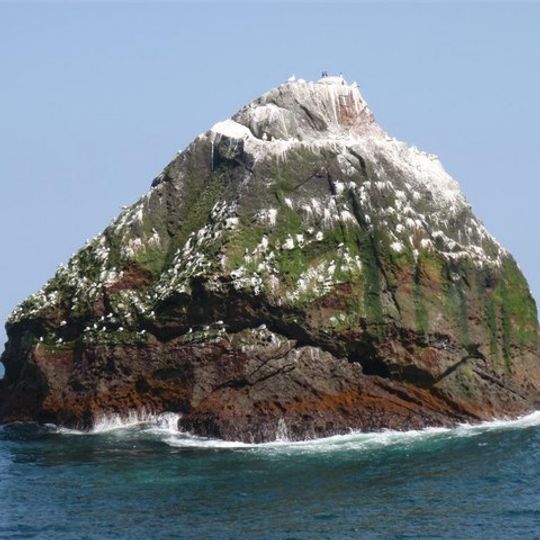
Rockall is a granite islet in the North Atlantic, 17.15 metres high, with a base diameter of 25 to 31 metres and a footprint of 784.3 square metres. Its lower section is dark reddish-brown, the midsection is coated in green vegetation and white patches where seabirds perch, and the upper ridges are covered in bright white material. The summit is a sharp, irregular peak.
The British government occupied the rock in 1955 and fixed a brass plaque to the summit to mark the claim. Later, the site became the subject of international disputes over fishing rights and maritime zones in the North Atlantic.
The name's origin is uncertain: it may come from Old Norse *rok, 'foaming sea', and kollr, 'bald head', or from Gaelic Sgeir Rocail, 'skerry of roaring'. In Scots Gaelic folklore Rocabarraigh is a mythical rock due to appear three times, its last appearance bringing the end of the world. Legends say the Irish monk Brendan the Navigator described Rockall in the sixth century.
Any visit requires specially equipped vessels that can handle strong currents and unpredictable weather. Landings are possible only in calm seas and remain risky even then due to the steep, slippery surface of the rock.
Greenpeace activists built a small platform on the summit in 1997 and stayed for 42 days to protest oil drilling. During that time, they declared the rock an independent micro-nation called Waveland with its own constitution.
The community of curious travelers
AroundUs brings together thousands of curated places, local tips, and hidden gems, enriched daily by 93,901 contributors worldwide.