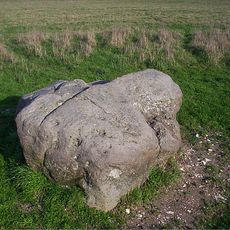
Durrington Walls, Neolithic monument site in Wiltshire, England.
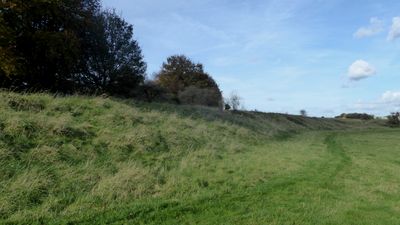
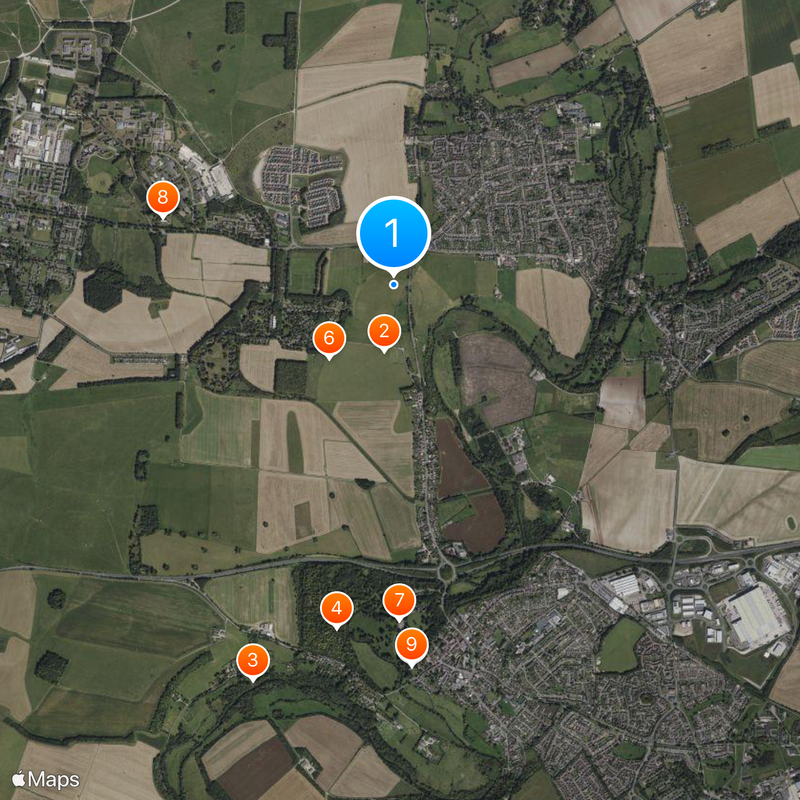
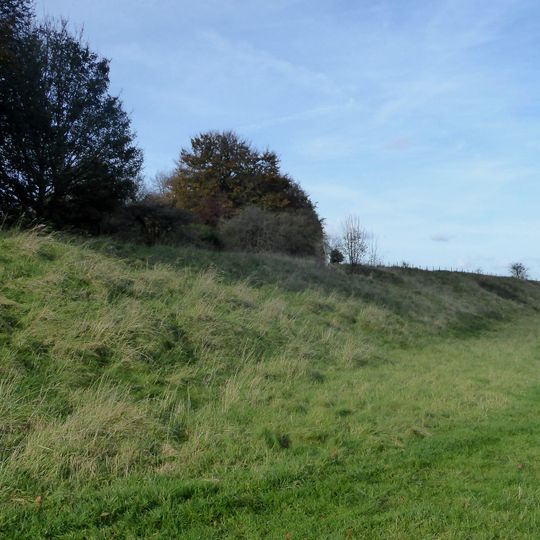
Durrington Walls is a large circular earthwork from the Neolithic period in Wiltshire that appears as a shallow bowl with raised edges across the grassland. The interior space reaches about 500 meters from one side to the other, while two clear breaks interrupt the bank at the northwest and southeast points.
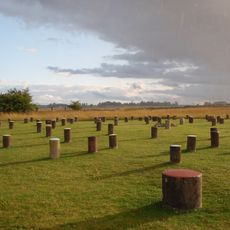
The site was built between 2800 and 2100 before the present era as a settlement and meeting place during the late Neolithic period. Excavations from 2004 to 2006 uncovered seven houses and traces of many hearths that suggest continuous use over several centuries.
The name comes from the earthwork ring that surrounds the wide open interior where groups gathered during special seasons. People entered through the two gaps in the bank to mark the turning of the year and share food and ritual together.
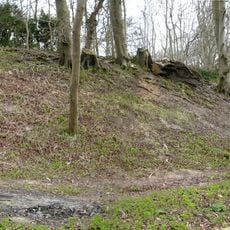
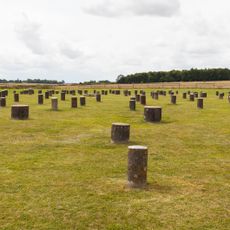
The outlines of the bank and ditch are clearly visible across the grassland, and both entrances can be easily identified when walking the circuit. The site lies next to the small village of Durrington and is accessible on foot through public paths.
In 2015 researchers using geophysical techniques found traces of about 90 stones buried beneath the surface that once stood in a line. This hidden row of stones likely ran along part of the bank and changes our understanding of how the Neolithic enclosure was designed.
The community of curious travelers
AroundUs brings together thousands of curated places, local tips, and hidden gems, enriched daily by 60,000 contributors worldwide.