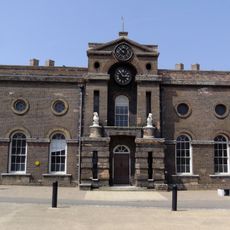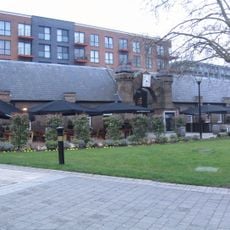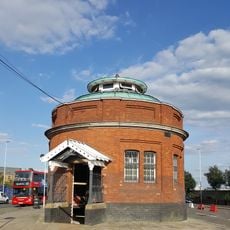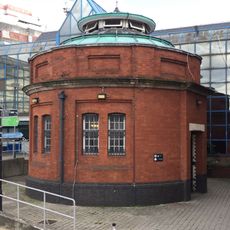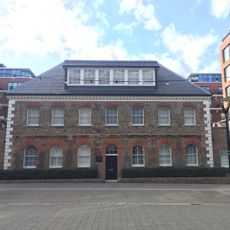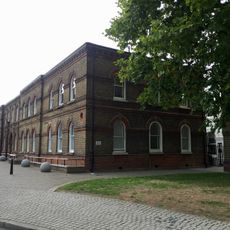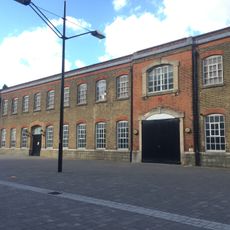
Woolwich foot tunnel, tunnel under the River Thames in East London
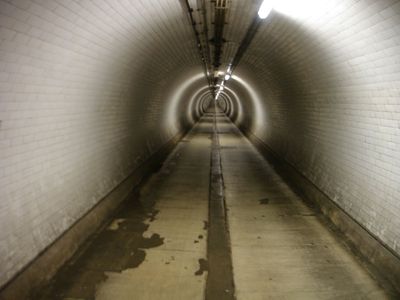
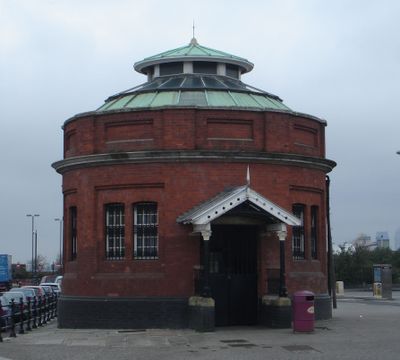
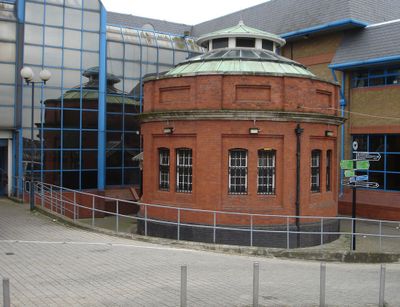
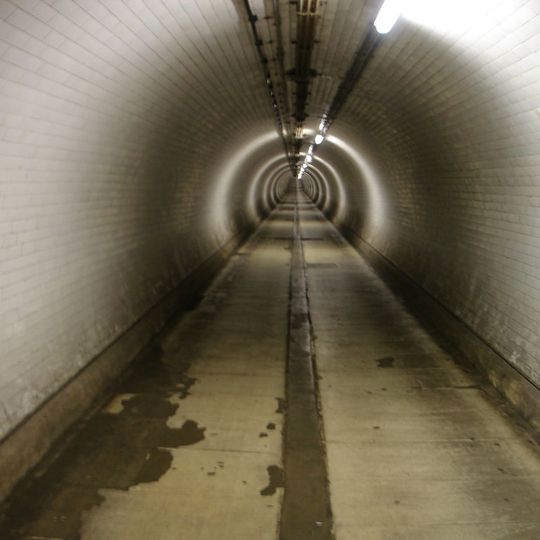
The Woolwich foot tunnel is an underground pedestrian passage connecting both banks of the River Thames in London, constructed from cast iron, concrete, and glazed tile. The 504-meter passage allows walkers to cross beneath the river without using bridges or ferries, with Yorkstone lining the walkway.
The tunnel was constructed in the 1880s to connect the two riverbanks and provide direct crossing for workers and residents. Its construction was a significant improvement to London's transport infrastructure and reduced travel time between what were then isolated areas on opposite sides of the Thames.
The tunnel serves as a daily passage for local residents and workers crossing between neighborhoods. It has become a familiar part of the commute for people who prefer moving underground rather than taking longer routes across bridges.
The tunnel is accessible for walkers and located at river level, making it straightforward to navigate. The passage is typically well-lit and offers a sheltered crossing, though visitors should wear proper footwear since the surface can be damp in wet weather.
The tunnel is used by thousands of commuters daily but remains largely unknown to tourists since it functions as a practical crossing rather than a landmark. This makes it a genuine local experience that appears as a surprising discovery when exploring the riverbanks.
The community of curious travelers
AroundUs brings together thousands of curated places, local tips, and hidden gems, enriched daily by 90,824 contributors worldwide.