Erie Canal, Historic waterway in upstate New York, United States
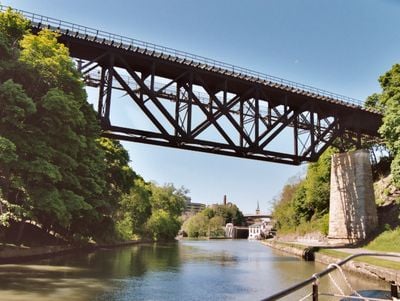
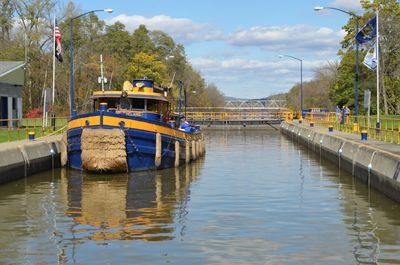
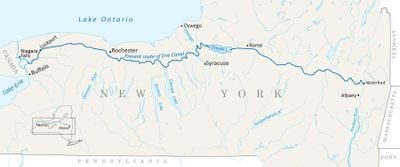
The Erie Canal is a historic waterway in New York State that stretches 363 miles (584 kilometers) from Buffalo on Lake Erie to Albany on the Hudson River. The system includes 36 locks and several stone aqueducts that cross rivers and valleys, including the Genesee River.
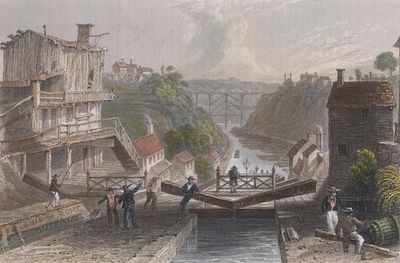
Construction began in 1817 and was completed in 1825, creating the first navigable link between the Atlantic Ocean and the Great Lakes. The project turned New York into the main trading hub of the young nation and encouraged settlement of the western territories.
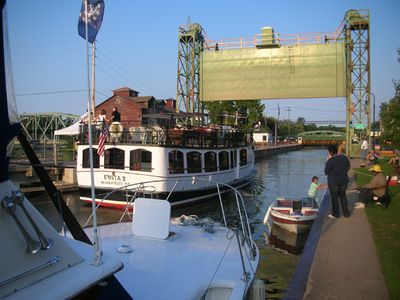
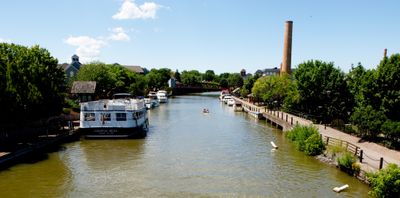
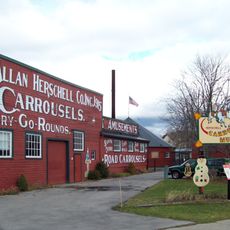
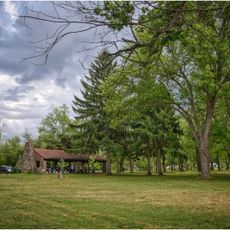
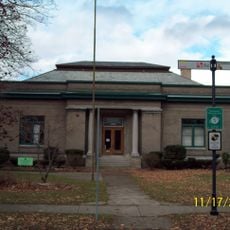
Communities along the waterway still celebrate their connection to the canal through festivals, boat tours, and walking paths that follow the old towpaths. Many of these small towns maintain the historic character of the canal era, with local shops and museums where visitors can learn about life during the shipping age.
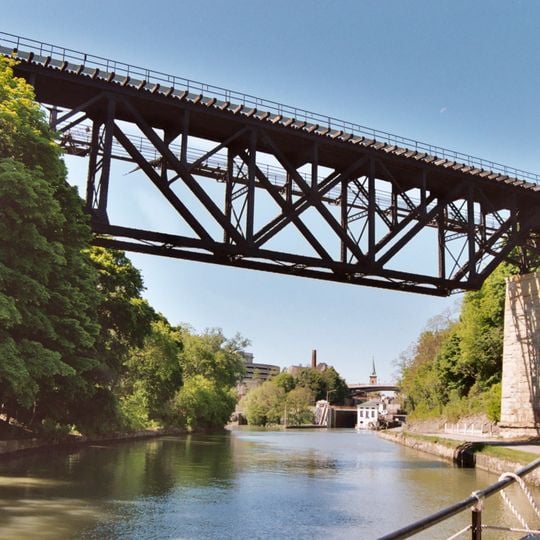
The waterway is now mainly accessible for recreational activities, with walking and cycling paths running alongside much of the route. Several sections also offer boat rides that let visitors see the preserved locks and bridges up close.
The cost of moving goods between Albany and Buffalo dropped by around 95 percent after the canal opened, while travel time fell from several weeks to about ten days. This change made the waterway one of the most important transport routes in 19th century North America.
The community of curious travelers
AroundUs brings together thousands of curated places, local tips, and hidden gems, enriched daily by 91,994 contributors worldwide.