Bowling Green, Urban park and National Register site in Financial District, Manhattan, United States
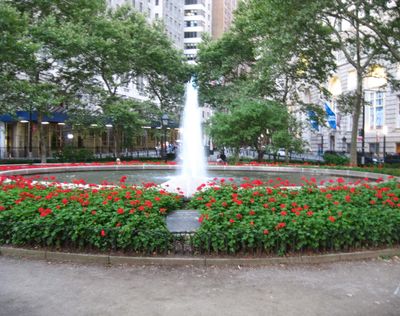
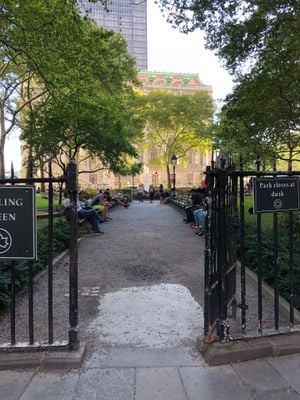
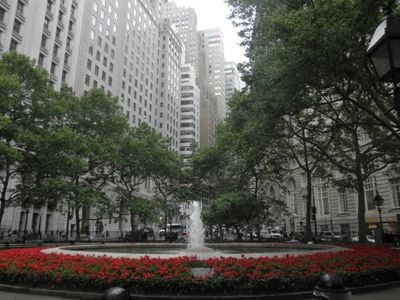
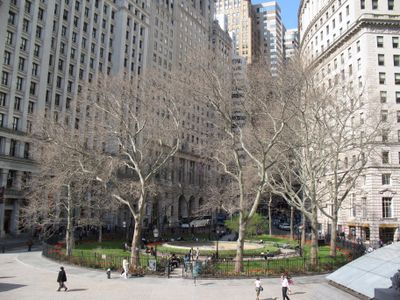
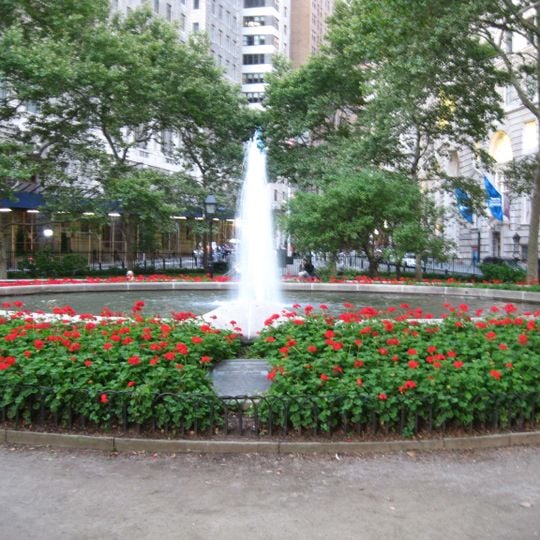
Bowling Green is a small circular park at the southern end of Broadway, built around a central fountain whose jet rises from a round pale-gray stone basin. A ring of low green plants densely set with bright red flowers, enclosed by a black metal fence of vertical bars and hoops, surrounds the fountain. A paved gray path runs outside the fence, and the park is bounded by its original 18th-century cast-iron fence, whose gate leaves carry signs reading "BOWLING GREEN" and "Park closes at dusk".
Established in 1733 as New York's first public park, the land was officially set aside for recreation and community gatherings. Colonists destroyed a statue of King George III that once stood in the center during 1776, melting the metal for ammunition.
The name comes from the bowling green that three landlords leased from the Common Council in 1733 for a peppercorn a year, promising walks and a green for the game. The park's 18th-century fence lost its crown finials on July 9, 1776, when a crowd toppled King George III's statue.
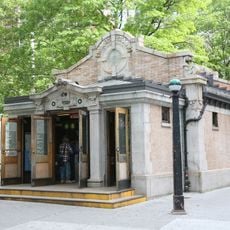
A subway station with the same name sits directly beneath the park and connects several lines running through different neighborhoods. The area is accessible during daylight hours and is regularly crossed by commuters and visitors moving between office buildings and attractions.
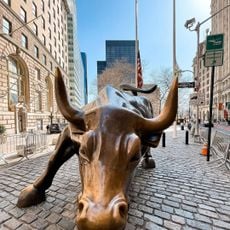
The bronze bull north of the park was originally placed without permission and immediately attracted visitors who touch its horns and nose. This gesture has evolved into a fixed ritual associated with hopes for financial success.
The community of curious travelers
AroundUs brings together thousands of curated places, local tips, and hidden gems, enriched daily by 93,336 contributors worldwide.