Canal Street railroad bridge, Vertical-lift railroad bridge in Chicago, US
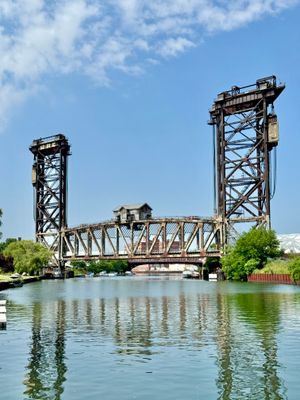
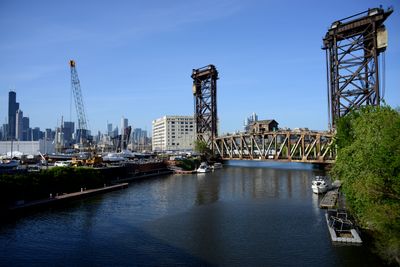
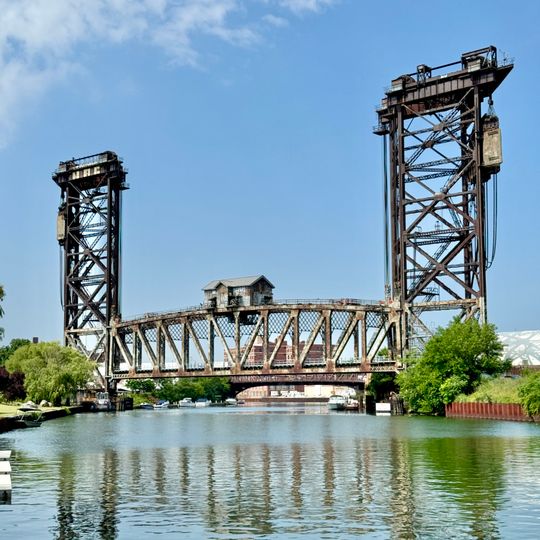
The Canal Street railroad bridge is a steel structure with a vertical-lift mechanism that crosses the South Branch of the Chicago River. Two rail tracks run at a steep angle to the waterway, creating a distinctive geometric arrangement above the flow.
Engineers Waddell and Harrington designed the structure in 1914, with completion in 1915. It replaced an older swing bridge but was cleverly built above the existing structure to avoid interrupting rail service during construction.
The bridge takes its name from Canal Street, reflecting the waterway infrastructure that developed in this part of the city. It remains part of the working rail network that shapes how the city moves people across the river each day.
The lifting mechanism raises the deck about 40 meters when vessels need to pass underneath. Visitors can see the bridge from various points along the riverbank, and the best views come from walking the Chicago River pathways on either the north or south side.
When completed, the main span weighed about 1500 tons, making it the heaviest vertical-lift bridge span built anywhere in the country at that time. This extraordinary feat of steel construction made it a technical marvel of its era.
The community of curious travelers
AroundUs brings together thousands of curated places, local tips, and hidden gems, enriched daily by 90,848 contributors worldwide.