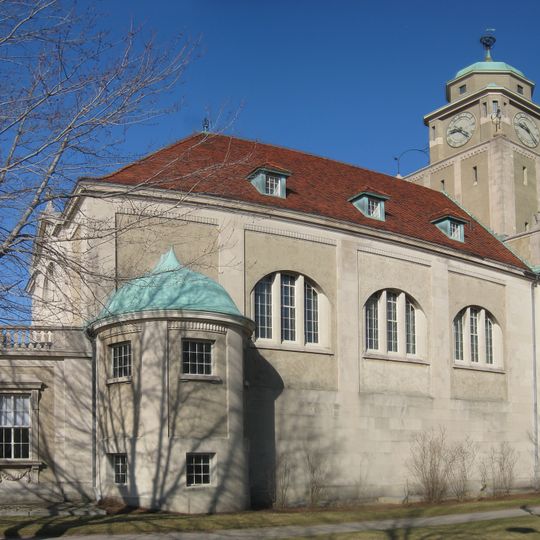
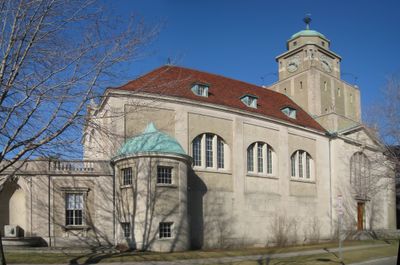
Busch–Reisinger Museum, Germanic art museum in Cambridge, United States.
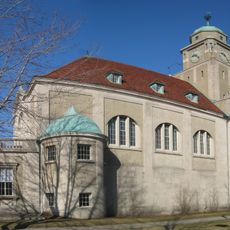
The Busch-Reisinger Museum is an art museum on the Harvard University campus in Cambridge, Massachusetts, dedicated to art from German-speaking countries, from the medieval period to the present day. The collection covers paintings, sculptures, and works on paper, and the museum shares a building with the Fogg and Arthur M. Sackler museums as part of the Harvard Art Museums complex.
The museum was founded in 1903 under the name Germanic Museum, with a focus on collecting art from German-speaking regions. It was renamed in the 1950s to honor two major donors, Hugo Busch and Georg von Reisinger, whose support had shaped the collection.
The galleries are home to a strong body of Expressionist and Bauhaus work, including pieces by Paul Klee and Lyonel Feininger, both of whom taught at the Bauhaus school. Walking through the rooms gives a clear sense of how those movements shaped the way artists thought about form and color.
The museum is located inside the Harvard Art Museums building on Quincy Street and is easy to reach on foot from central Cambridge. A single admission covers all three museums in the building, so a visit can take a good part of a day depending on your pace.
The Busch-Reisinger is the only museum outside of Europe dedicated entirely to art from German-speaking countries. During the Nazi period, it became a refuge for works and artists banned from exhibiting in Germany, which is why the collection holds pieces that would otherwise have been lost or destroyed.
The community of curious travelers
AroundUs brings together thousands of curated places, local tips, and hidden gems, enriched daily by 92,883 contributors worldwide.

![Gund Hall - Graduate School of Design [Harvard University]](https://img9.digsty.com/MxS4GVZZ6ceYqvq7BmvRuupz_5GuWC2qfiT2RNpQJoc/rs:fill:230:230:1/g:fp:0.5:0.5/czM6Ly9hcm91bmR1cy8xNC8xNjU4ODA5MjItOTIwYmE4YTUuanBn.jpg)
