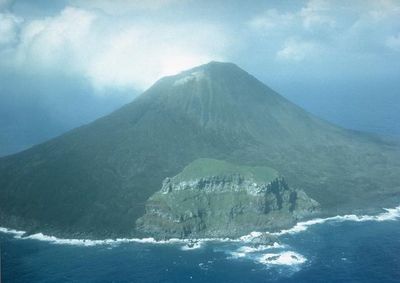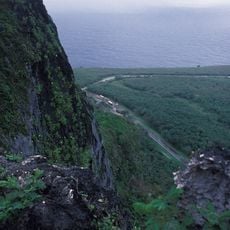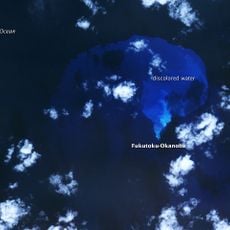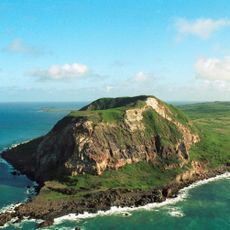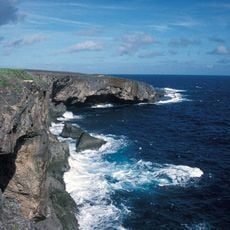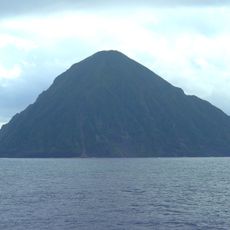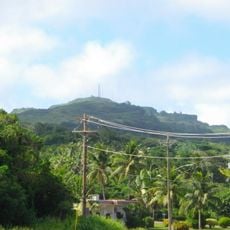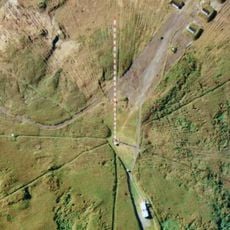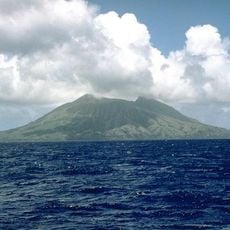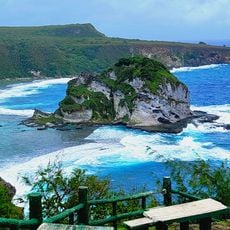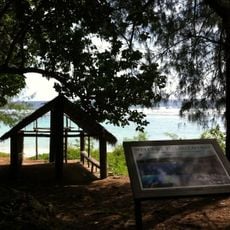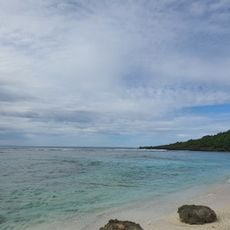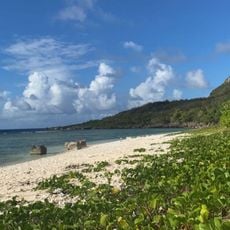
Farallon de Pajaros, Volcanic island in Northern Mariana Islands, US.
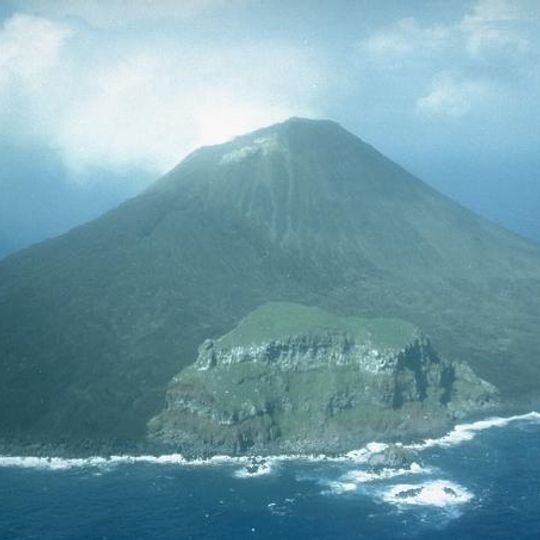
Farallon de Pajaros is a stratovolcano that rises 360 meters above sea level, forming an island approximately 1.8 kilometers long and 1.6 kilometers wide. The terrain shows the typical features of an active volcano with steep slopes and sparse vegetation.
The German Empire controlled the island from 1899 to 1914 as part of German New Guinea following the German-Spanish Treaty. After World War I, the island passed to Japanese administration and eventually came under American control.
Japanese companies began bird hunting operations on the island starting in 1903 to collect feathers for export to Japan and Europe. This activity shaped the island's early economic use for decades.
The island remains uninhabited and access is restricted to research expeditions and geological monitoring activities that require special permits. Visitors should know that volcanic activity is regularly monitored and landings are only possible under strictly controlled conditions.
The U.S. Geological Survey Alaska Volcano Observatory conducts continuous monitoring operations at this location, making it the northernmost point of the Mariana Islands archipelago. Regular measurements provide important data about volcanic processes in the Pacific region.
The community of curious travelers
AroundUs brings together thousands of curated places, local tips, and hidden gems, enriched daily by 90,828 contributors worldwide.