United States Bullion Depository, Gold depository in Kentucky, United States
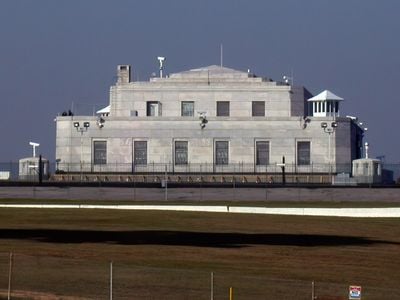
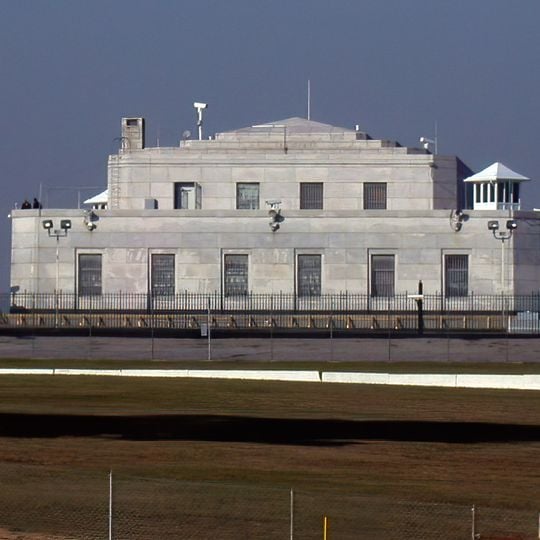
The United States Bullion Depository is a rectangular, light-grey stone building, wider than tall, with a flat roofline. Its lower facade has six evenly spaced barred windows, three on each half, and the upper level holds four smaller barred windows plus one at the far left. A white square cupola with a pyramidal roof sits on the right corner, and a metal fence stands in front.
The Treasury announced the project in June 1935 and completed the building in December 1936 for $560,000 on land transferred from the Army post next door. Gold arrived by armored train from the New York Assay Office and Philadelphia Mint in 1937 and again in 1941, reaching about 417 million troy ounces. It was listed on the National Register of Historic Places in 1988.
The name Fort Knox has become shorthand in American speech for absolute security and appears regularly in films and television shows. Visitors see only the outer walls, but the idea of impenetrable vaults shapes how the nation imagines the protection of its wealth.
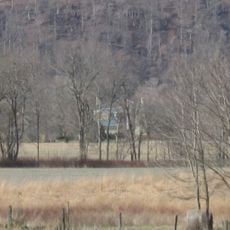
The facility is closed to the public, and visitors can view it only from outside the security perimeter. The surrounding military area restricts access, so only a few vantage points exist along nearby roads.
During World War Two, the vault housed original documents including the Declaration of Independence, the Constitution, and Lincoln's Gettysburg Address to protect them from war damage. These documents remained here for several years before returning to their original homes after the war ended.
The community of curious travelers
AroundUs brings together thousands of curated places, local tips, and hidden gems, enriched daily by 92,323 contributors worldwide.