Ohio and Erie Canal, Transportation canal in Cuyahoga County, United States
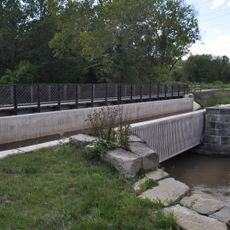
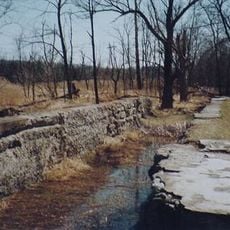
The Ohio and Erie Canal ran 496 km from the Cuyahoga River near its outlet on Lake Erie at Cleveland to the Ohio River near Portsmouth, with a branch linking Akron. Its channel was specified at a minimum of 40 feet wide at the top, 26 feet at the bottom and 4 feet deep, limits often exceeded where building wider was cheaper. Locks, culverts and aqueducts carried it through the Scioto valley and the Licking Divide.
Ground was broken on July 4, 1825 at Licking Summit near Newark. The canal carried freight from 1827 to 1861, when railroads ended demand; from 1862 to 1913 it supplied water to industries and towns. Severe flooding in 1913 led to the abandonment of much of the system. Surviving sections in the Akron-Cleveland area are now managed by the National Park Service and the Ohio Department of Natural Resources.
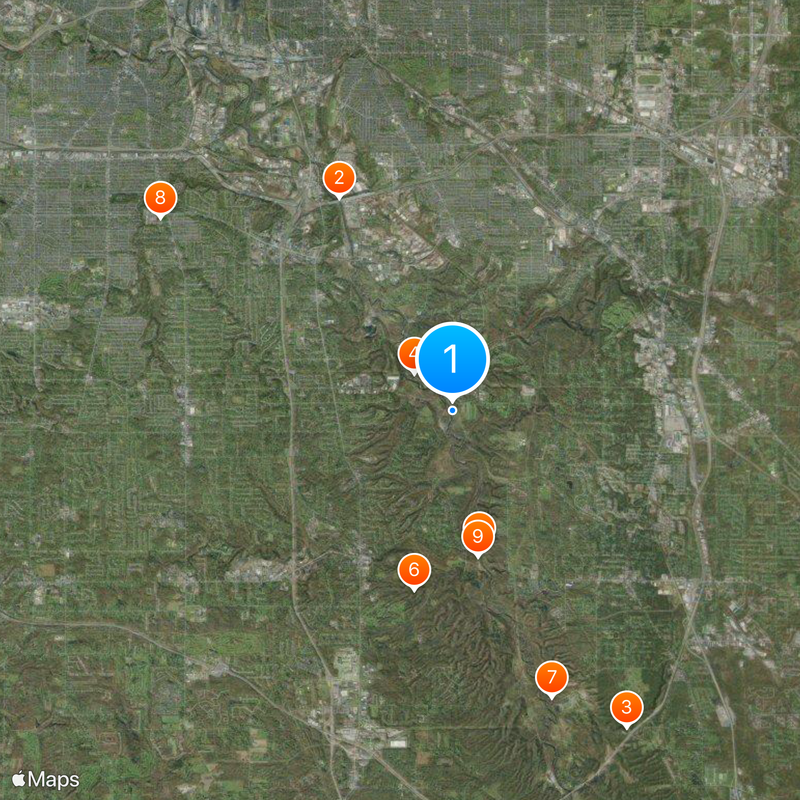
The canal's name is recalled in the Ohio and Erie Canal Historic District, a National Historic Landmark since November 1966 within Cuyahoga Valley National Park. Visitors walk or cycle the 30 km Towpath Trail near Valley View, following the path once used by mules towing canal boats.
The canal can be explored on foot or by bicycle along paths that run alongside the water. Many sections are easily accessible with multiple entry points for visitors of different abilities.
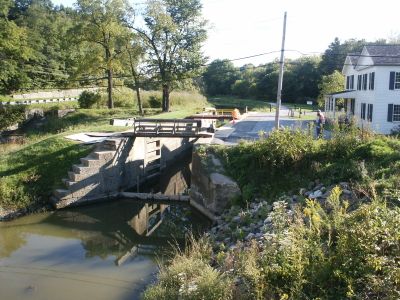
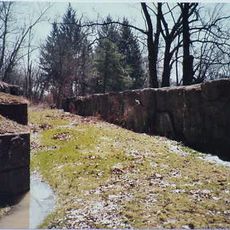
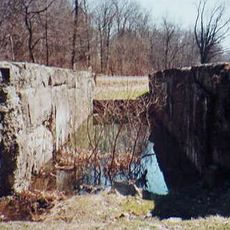
The locks were engineering marvels of their time, allowing boats to overcome elevation changes of dozens of feet. Some of these original structures still stand and demonstrate the durability of the early engineering work.
The community of curious travelers
AroundUs brings together thousands of curated places, local tips, and hidden gems, enriched daily by 95,283 contributors worldwide.