Cut River Bridge, Iron truss bridge in Mackinac County, Michigan
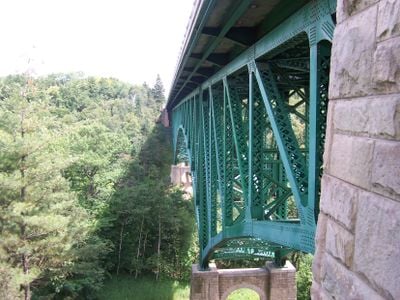
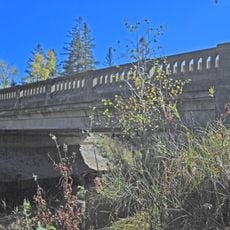
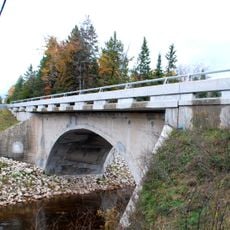
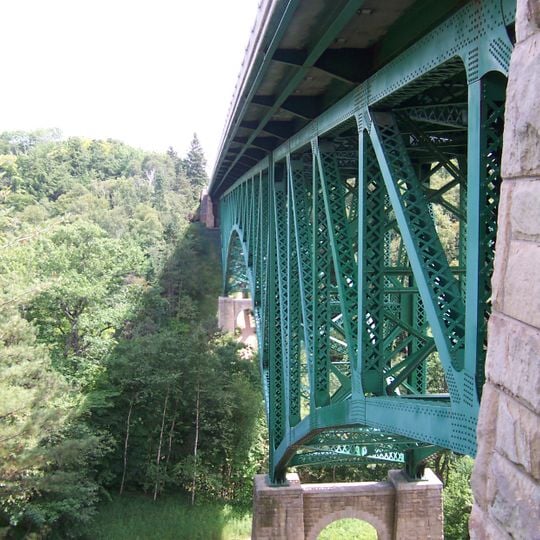
Cut River Bridge is an iron truss and beam bridge in Mackinac County, Michigan that spans a deep valley. The structure rises significantly above the riverbed and includes cantilever design with pedestrian walkways for crossing.
Construction started in 1941 but paused during World War II due to steel shortages, with completion finally occurring in 1947. The delay reflected how wartime demands disrupted civilian infrastructure projects across America.
The Michigan Legislature named the bridge after Navy SEAL Heath Michael Robinson, who died during military service in Afghanistan in 2011.
The bridge sits on US Highway 2 between Epoufette and Brevort and provides access to hiking trails and a roadside park with picnic facilities. Visitors can explore the trails on both sides and view the valley from multiple vantage points.
The bridge holds 888 tons of steel and ranks as one of only two cantilevered truss beam bridges in Michigan, making it a rare example of this specific design type. This approach allowed crossing the deep valley without placing support pillars in the middle.
Location: Michigan
Official opening: 1947
Made from material: iron
GPS coordinates: 46.04500,-85.12520
Latest update: December 6, 2025 16:04
Michigan holds a wide array of natural and historical sites across its two peninsulas. The shoreline runs for hundreds of miles along the Great Lakes, showing sand beaches, rocky cliffs, and dune formations. In the north, dense forests, waterfalls, and rock formations shaped by erosion dominate the landscape. Lighthouses from the 19th century mark key points along the waterways. Historical sites document the region's development, from military posts to industrial monuments. Visitors can explore places like Pictured Rocks, where colored sandstone cliffs rise directly above the water, or Sleeping Bear Dunes, where sand piles up to 450 feet (137 meters) high. Mackinac Bridge connects the two peninsulas with a span of roughly 5 miles (8 kilometers). At Hartwick Pines State Park, pine trees stand several centuries old. Tahquamenon Falls ranks among the larger waterfalls east of the Mississippi. On Mackinac Island, Fort Mackinac dates to the 18th century, while the Heidelberg Project in Detroit presents contemporary art in an urban setting. This collection presents both natural and human-made sites across a region that stretches over both of Michigan's peninsulas.
Mackinac Bridge
40 km
Waugoshance Light
28.8 km
Castle Rock
33.2 km
Wilderness State Park
38.7 km
Mackinac Bridge Walk
39.6 km
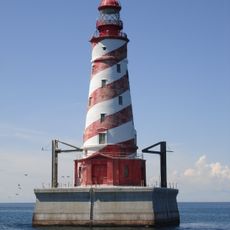
White Shoal Light
22.6 km
Father Marquette National Memorial
38.2 km
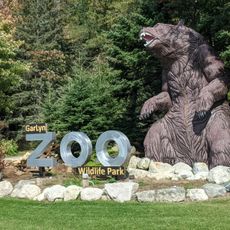
Garlyn Zoo
13.9 km
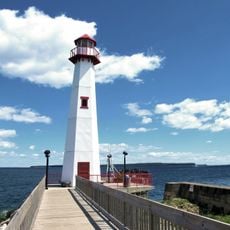
Wawatam Lighthouse
37.5 km
Straits of Mackinac Shipwreck Preserve
38.8 km
The Headlands
39.4 km
Straits State Park
38 km
St. Helena Island Light
29.3 km
McGulpin Point Light
39.6 km
Grays Reef Light Station
31.2 km
Lansing Shoals Light Station
37.3 km
St. Anthony's Rock
36.6 km
St. Ignace Mission
36 km
Birch Lodge
17.7 km
John Chambers House
36.9 km
Hiawatha Sportsman's Club 1931 Maintenance Building and Commissary
31.4 km
M-28–Tahquamenon River Bridge
35.9 km
Gros Cap Archaeological District
32.1 km
Marquette Street Archaeological District
36.2 km
Mackinac Trail – Carp River Bridge
31.6 km
Manitou Lodge
26.7 km
Sacred Heart-Gros Cap Church
29.7 km
Top of The Lake Snowmobile Museum
25.7 kmVisited this place? Tap the stars to rate it and share your experience / photos with the community! Try now! You can cancel it anytime.
Discover hidden gems everywhere you go!
From secret cafés to breathtaking viewpoints, skip the crowded tourist spots and find places that match your style. Our app makes it easy with voice search, smart filtering, route optimization, and insider tips from travelers worldwide. Download now for the complete mobile experience.
A unique approach to discovering new places❞
— Le Figaro
All the places worth exploring❞
— France Info
A tailor-made excursion in just a few clicks❞
— 20 Minutes