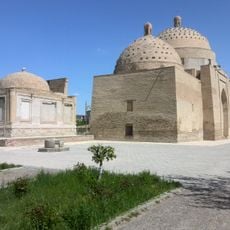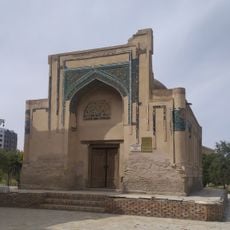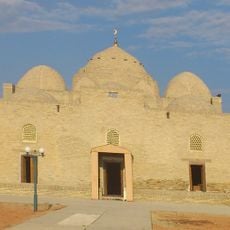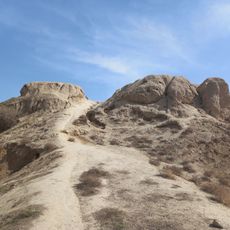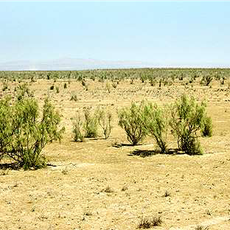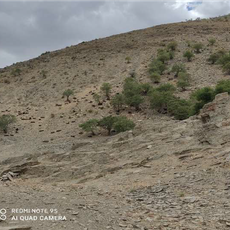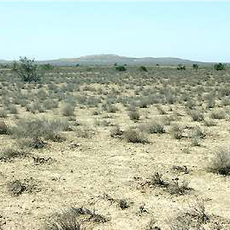
Rabati Malik Caravanserai, Historic caravanserai ruins in Navoiy District, Uzbekistan.
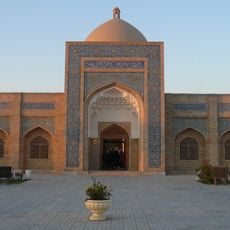
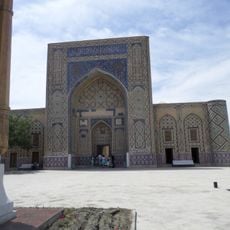
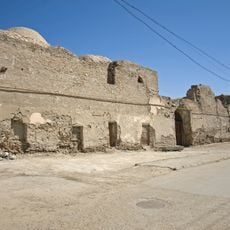
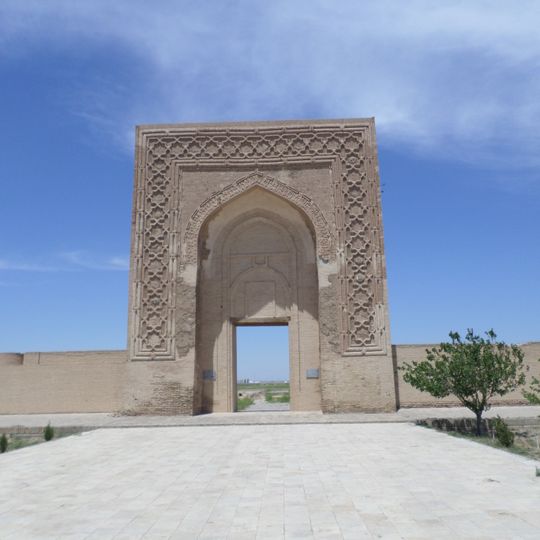
Rabati Malik is a ruined caravanserai built in the Iranian architectural style in the Navoiy District of Uzbekistan, sitting along the old road between Bukhara and Samarkand. The main gate survives in relatively good condition and displays geometric brick patterns, while low walls trace the footprint of the former compound.
The complex was built in 1078 under the Karakhanid ruler Nasir Khan as a resting place along the main road of the region. Over time, shifting trade routes and political changes led to its gradual decline, and it now holds the status of a nationally listed heritage site in Uzbekistan.
The name Rabati Malik means roughly "fortress of the king" and reflects the authority of the ruler who ordered its construction. Travelers passing through today can still read the brick patterns on the surviving gate, which once marked arrival at a place of rest and trade.
The site is open year-round and easy to reach since it sits directly along the main road connecting two major cities in the region. There is very little shade on the grounds, so sturdy footwear and some sun protection are worth packing, especially in summer.
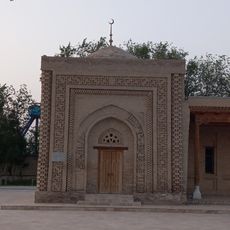
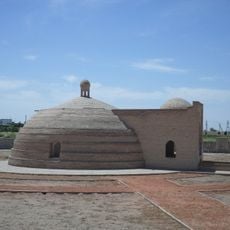
Just beside the main gate stands a sardoba, a domed underground cistern built to store rainwater for travelers crossing this dry stretch of land. This type of cistern is rare enough that seeing one next to a caravanserai gives a fuller picture of how journeys were made possible here.
The community of curious travelers
AroundUs brings together thousands of curated places, local tips, and hidden gems, enriched daily by 91,224 contributors worldwide.