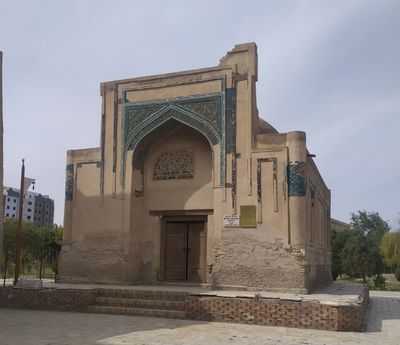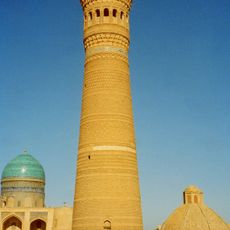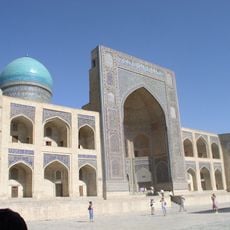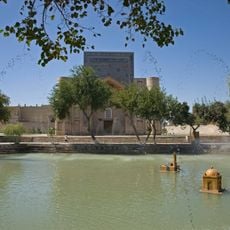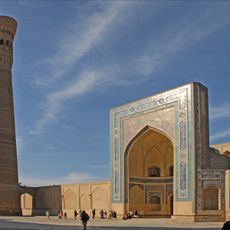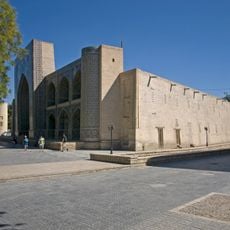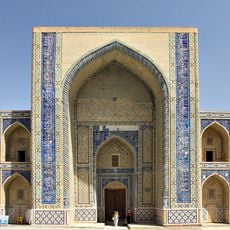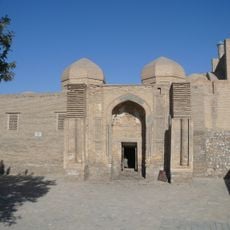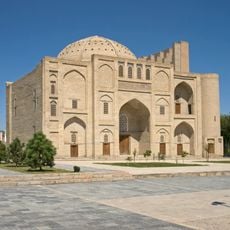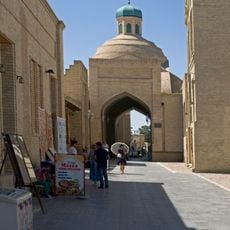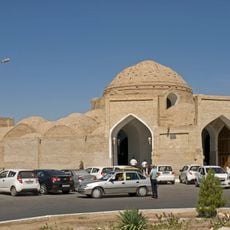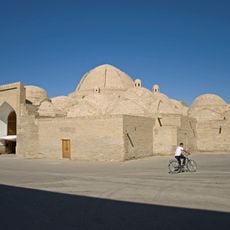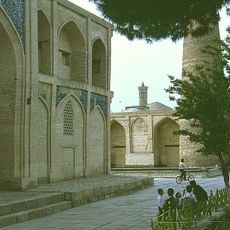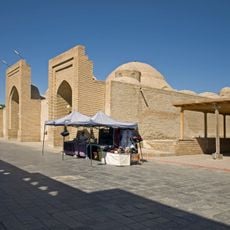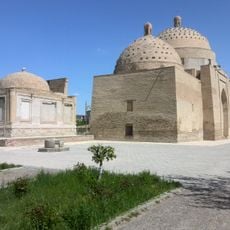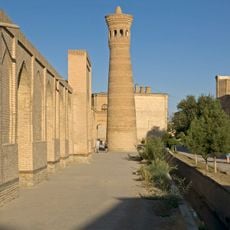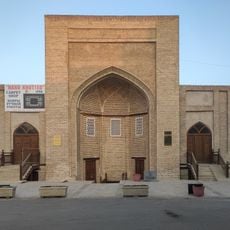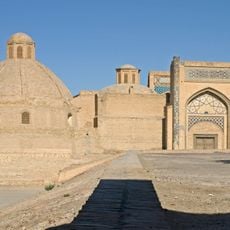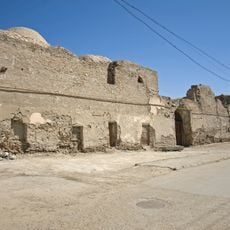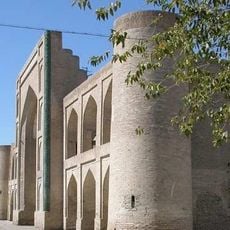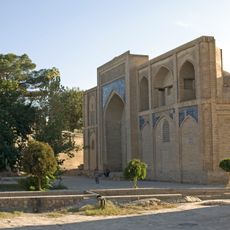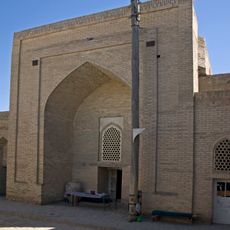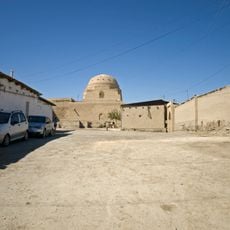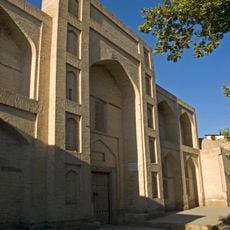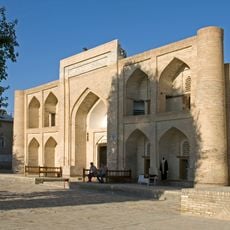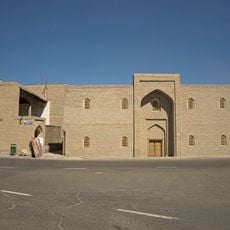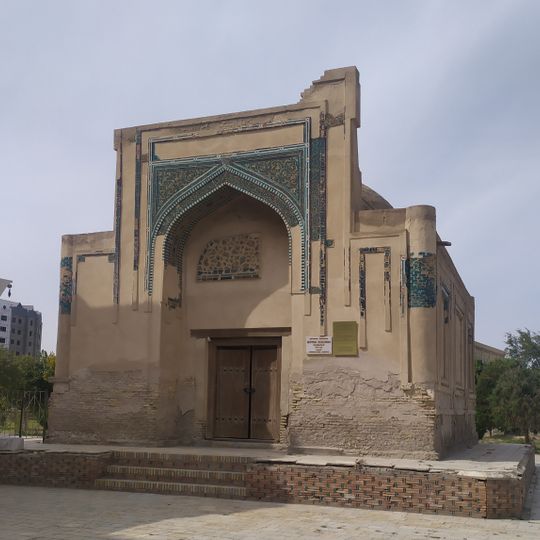
Bayan-Quli Khan Mausoleum, 14th century mausoleum in Bukhara, Uzbekistan.
Bayan-Quli Khan Mausoleum is a cubic structure from the 14th century with a prayer room and a separate grave chamber beneath a dome. The building combines functional spaces with decorative surfaces that show the architectural style of that time.
The mausoleum was built in 1358 for Bayan Kuli Khan, a ruler of the Chagatai Khanate. Its construction reflected the artistic height of the region during that period.
The surfaces display intricate geometric patterns and Kufi inscriptions in dark blue, light blue, and white ceramic tiles. These decorations reflect the artistic traditions of the region and show the craftsmanship of the builders who created them.
The monument sits about two kilometers southeast of Bukhara's old city center in the Fathabad district. It can be easily reached on foot and visited alongside nearby sites when exploring the historical area.
Original ceramic tiles from the building are displayed in museums in London and Hamburg, showing how valued this craftsmanship became. These fragments reveal how the artistic skills from that era gained international recognition.
The community of curious travelers
AroundUs brings together thousands of curated places, local tips, and hidden gems, enriched daily by 60,000 contributors worldwide.