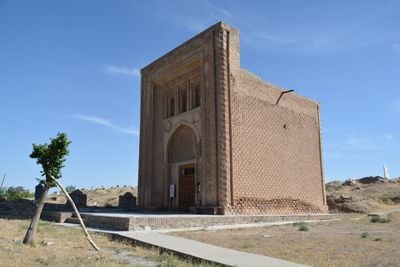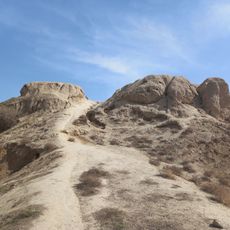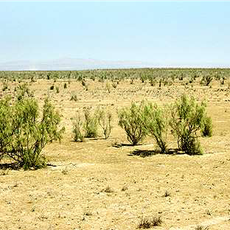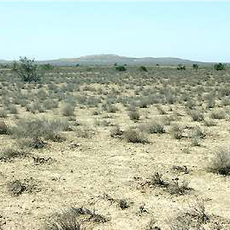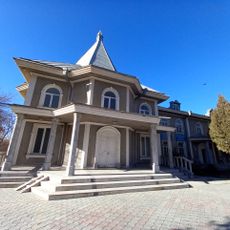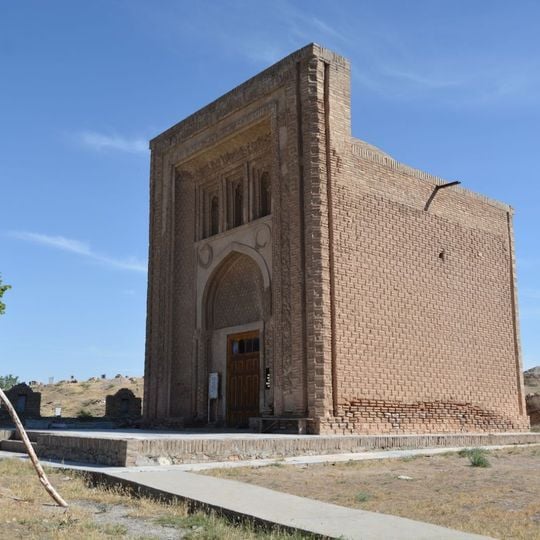
Arab-Ata Mausoleum, 10th century mausoleum in Nurobod District, Uzbekistan.
The Arab-Ata Mausoleum is a square domed structure with a prominent arched entrance, rising from a hilltop in the rural landscape. The building displays characteristic features of medieval Islamic architecture with thick walls and a geometric exterior design.
Construction took place in the late 10th century, making it one of the earliest Islamic structures in Central Asia to feature a projecting portal. This architectural innovation influenced how other regional holy sites were designed afterward.
The mausoleum honors a local religious figure whose shrine continues to draw visitors seeking spiritual connection. You notice offerings and signs left by people at the site, showing how it remains a meaningful place for devotion today.
The site sits isolated in the countryside, so visitors should plan to arrive by car and allow travel time from the nearest towns. The grounds are open and accessible, though there are few facilities or amenities nearby.
Archaeological work at the site has uncovered evidence of human activity dating back to ancient times, showing that this location held importance long before the mausoleum was built. The layered remains suggest people have occupied and valued this spot for thousands of years.
The community of curious travelers
AroundUs brings together thousands of curated places, local tips, and hidden gems, enriched daily by 91,317 contributors worldwide.