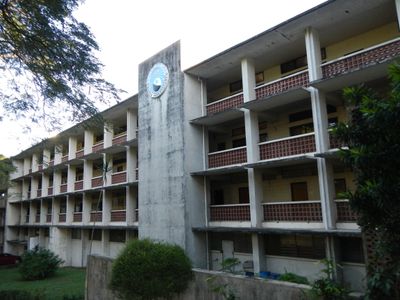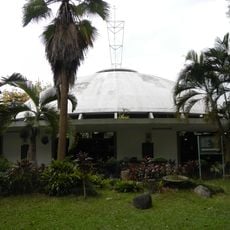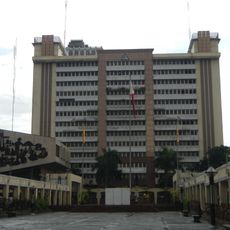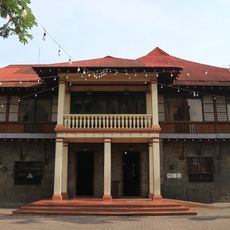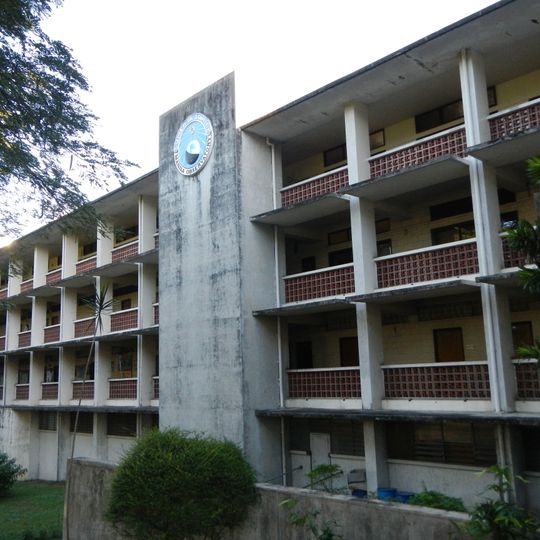
Manila Observatory, Scientific research organization in Quezon City, Philippines.
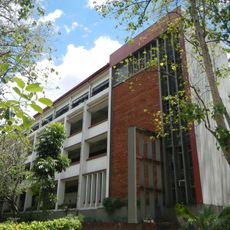
Manila Observatory is a research facility at Ateneo de Manila University that focuses on climate science, geomatics, and Earth science. The institution operates laboratories and monitoring stations where meteorologists, seismologists, and geologists collect and examine data about weather, earthquakes, and ground movements.
The facility was founded in 1865 by Jesuit missionaries as a weather observation station focused on recording atmospheric conditions. Over time it expanded to include seismic and astronomical research by the end of the 1800s.
The observatory serves as a meeting place for scientists working on environmental problems that affect Philippine communities today. Visitors can see how researchers use instruments and data to understand the natural forces shaping the islands.
The site is located on the Ateneo de Manila University campus and is best accessed when visiting the institution itself. Access may be limited to researchers and authorized visitors, so it is worth inquiring ahead about visiting possibilities.
The facility was destroyed during World War II but rebuilt its operations to emerge as an even stronger research center afterward. Today it is known for its work in predicting typhoons and monitoring earthquakes affecting the Philippines.
The community of curious travelers
AroundUs brings together thousands of curated places, local tips, and hidden gems, enriched daily by 60,000 contributors worldwide.