Praia das Maçãs Prehistoric Monument, Chalcolithic beehive tomb in Colares, Portugal
Praia das Maçãs Prehistoric Monument is a Neolithic burial site in Colares with an artificial cave and a circular stone chamber measuring about 5.5 meters across. The location sits close to the Atlantic coast and displays the construction methods used in ancient times.
An agricultural worker found the site in 1927. Limited digs by the National Museum of Archaeology and Ethnology followed, but full excavation of the necropolis began in 1969 under Vera Leisner, Georges Zbyszewski and Octávio da Veiga Ferreira, after a private collector showed them finds from the 1930s. Sintra Council carried out further work in 1981, and the site was classified a national monument in 1974.
The site is cited as an example of re-appropriating a symbolic location: a Neolithic rock-cut cave was later joined by a Chalcolithic tholos, so funeral practices of two eras share one space. The finds, including geometric microliths, arrowheads, polished axes and cylindrical idols, are kept in Lisbon's National Museum of Archaeology and Ethnology and the Regional Museum of Sintra.
The monument stands among houses near Praia das Maçãs beach, in a protected zone where construction is forbidden. Because the structures were covered with sand for protection, little is visible today. Plans to turn the complex into a museum area, first discussed in 2001, have not been implemented.
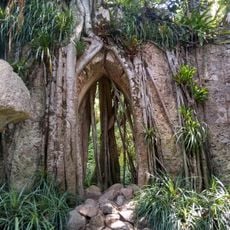
The interior is supported by a central limestone pillar holding a dome built without any mortar or binding material. Excavations revealed geometric microliths and cylindrical idols, showing that ancient occupants created small decorated objects.
The community of curious travelers
AroundUs brings together thousands of curated places, local tips, and hidden gems, enriched daily by 94,738 contributors worldwide.