Category:Castelo de Lagos, Medieval fortress in Lagos, Portugal
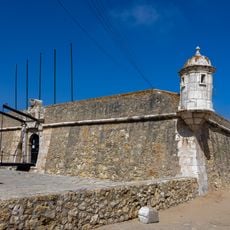
Castelo de Lagos is an old fortress in the city of Lagos with thick stone walls and defensive towers at its corners. The structure follows the shoreline and offers views over the harbor and surrounding urban area.
Lagos was walled from the reign of Afonso III (1248–1279), works continued under Denis and Afonso IV, and a second, artillery-adapted line was finished in 1598. The castle itself was enlarged in the 16th century and became the residence of the governors, hence Castelo dos Governadores. The 1755 earthquake destroyed the castle and much of the walls; it was never rebuilt and was partly turned into a hospital. Classified a national monument on 20 June 1924.
The castle's name changed with its use: after the 16th-century works it housed the governors, so it became known as the Castelo dos Governadores. The walls also shaped the town plan, and the archaeologist Rui Mendes Paula described them as a structuring element of the urban landscape. Excavations near the old police station uncovered a pit with five skeletons and a manilha, a ring used as currency to buy slaves.
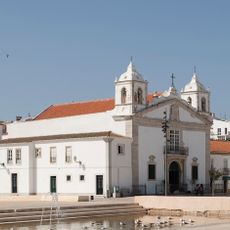
The defences form an irregular pentagon around the old town; the medieval stretch runs by the Church of Santa Maria do Castelo, while the later bastioned wall faces the river. The Porta da Vila bastion has housed an astronomical observatory since 2001. Parts of the perimeter were demolished as the city grew, so the circuit is not continuous.
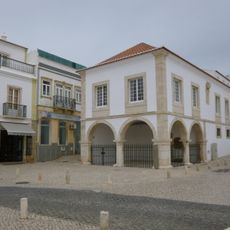
Excavations during renovation of the museum and the former police station by the Porta da Vila uncovered two towers and stretches of the medieval wall, plus a pit holding five skeletons, one showing signs of severe violence, and a manilha, a ring used as currency to buy slaves. Archaeologist Elena Morán notes the pit lay inside the walls, beside a street and several churches, unlike the common grave by the Gafaria.
The community of curious travelers
AroundUs brings together thousands of curated places, local tips, and hidden gems, enriched daily by 93,107 contributors worldwide.