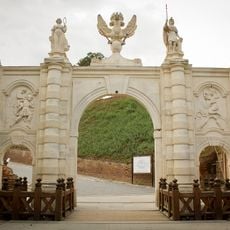
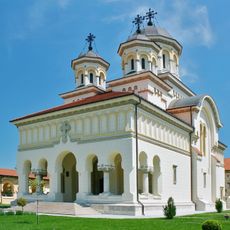
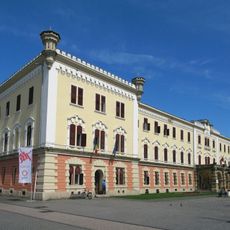
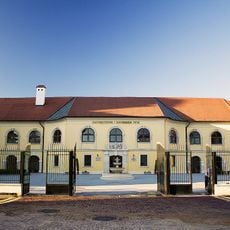
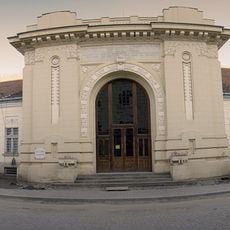
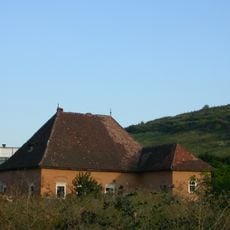
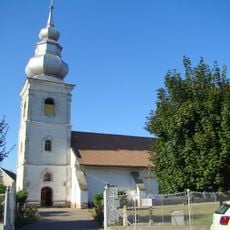
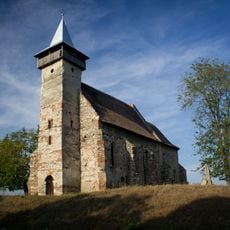
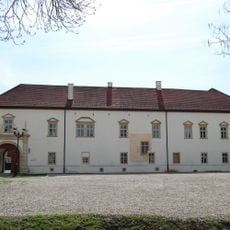
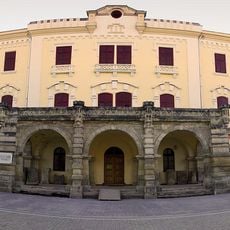
Fürstenpalast, Renaissance palace in Alba Iulia, Romania.
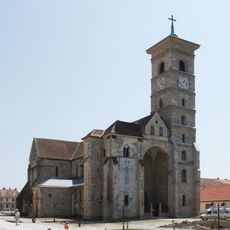
The Fürstenpalast stands beside the Roman Catholic Cathedral in Alba Iulia. Its buildings are grouped around two square courtyards, and the complex mixes Gothic, Renaissance and Baroque styles. The south side incorporates large stone blocks taken from the Roman castrum of Apulum and the medieval fortress. It is listed as monument AB-II-m-A-00133.
Built in the 15th century as the residence of the episcopal chapter, where documents were drafted and authenticated, the palace became the princely seat in the 16th century. Mihai Viteazul stayed here for 11 months in 1599–1600. Turkish and Tatar invasions damaged it in 1658 and 1662; after the Habsburg conquest it served as a barracks for three centuries, housing the Austrian garrison, arsenal and artillery barracks, and in December 1918 was assigned to the 21st Infantry Regiment.
Foreign chronicles of the period described the princely palace as a very luxurious building adorned with frescoes and marble staircases. The name Fürstenpalast refers to its role from the 16th century as the residence of the princes of Transylvania. For 11 months in 1599 and 1600 it served as the residence of voivode Mihai Viteazul. Since 1918 it belonged to the command of the 21st Infantry Regiment.
Visitors can explore the building on guided tours offered in different languages throughout the day. Access is through the main gates of the citadel complex, and expect to walk through multiple floors and rooms.
The building preserves original medieval structures beneath its Baroque layers, showing how different periods were built one on top of another. These remains allow visitors to see how construction methods and styles changed over seven centuries.
The community of curious travelers
AroundUs brings together thousands of curated places, local tips, and hidden gems, enriched daily by 93,887 contributors worldwide.