Muntele de sare Praid, Nature reserve in Harghita County, Romania
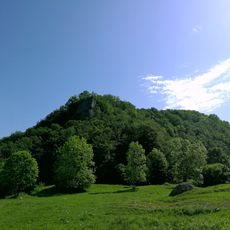
The Praid Salt Mountain spreads across a large area with a remarkable salt canyon shaped by natural erosion processes. The landscape reveals layers of different mineral compositions that make visible the geological history and age of these deposits.
The salt deposit was cut by the Corund stream in the late Quaternary, forming a salt canyon and separating the small Corbul Mic hill from the main massif. The first botanical account of the Praid area appeared in a manuscript by József Benkő (1740–1814), describing a plant called brădișor (Lycopodium selago). In 1837 Franz Friedrich Fronius listed the salt-loving flora around Praid and recorded the American species Rudbeckia laciniata, its first attestation in Transylvania.
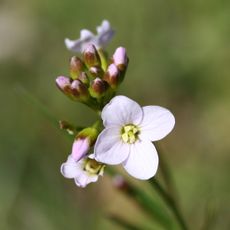
The reserve is named Sóhát in Hungarian, meaning "salt hill". Its salt springs feed halophile plants such as Salicornia europaea, called brâncă or brădișor de sărătură locally. The botanist József Benkő (1740–1814) described the area's flora in a manuscript, and Franz Friedrich Fronius recorded its salt-loving species in 1837.
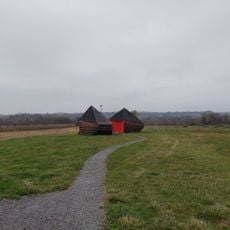
The site has marked trails that guide visitors safely through the area while offering geological insights. It is important to wear sturdy footwear and be prepared for varying elevations and open exposures, as the terrain is naturally unshielded.
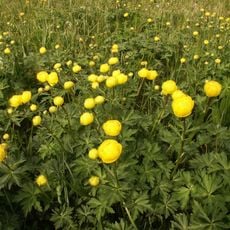
The site hosts specialized plant species that grow under extreme salt conditions and appear nowhere else in the region. These plants have developed special adaptations to survive high salinity and harsh climatic exposure.
The community of curious travelers
AroundUs brings together thousands of curated places, local tips, and hidden gems, enriched daily by 94,340 contributors worldwide.