Volga Hydroelectric Station, Hydroelectric power station in Volgograd Oblast, Russia
The Volga Hydroelectric Station spans the Volga between Volgograd and Volzhsky. Its concrete spillway dam is 725 metres long and 44 metres high, while the earthfill dams reach a combined length of 3,250 metres and a maximum height of 47 metres. The powerhouse is 736 metres long and 71 metres high, and road and rail crossings run across the structures.
Construction began in 1950 under Stalin's directive and mobilized thousands of enterprises from across the Soviet realm. The facility was commissioned in 1961 and marked the peak of the Soviet electrification campaign along the Volga.
The station is named after Fyodor Loginov, a Soviet hydraulic engineer, and was earlier known as the Stalingrad station and as the Volga station named after the 22nd CPSU Congress. Its navigation locks let river traffic pass the dam, and the road and railway across the structures link Volgograd with Volzhsky, the town that grew from the builders' settlement.
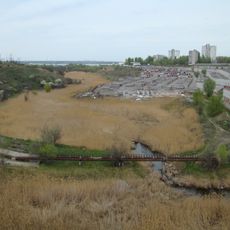
The dam is visible from outside and lies directly on the highway connecting both cities. Visitors can see the large reservoir upstream and the sprawling facility from the riverbank when the weather is clear.
For three years this was the largest power facility in the world and remains the largest hydroelectric plant in Europe to this day. The dam stretches so far that you can barely see the opposite bank when crossing it.
The community of curious travelers
AroundUs brings together thousands of curated places, local tips, and hidden gems, enriched daily by 93,094 contributors worldwide.