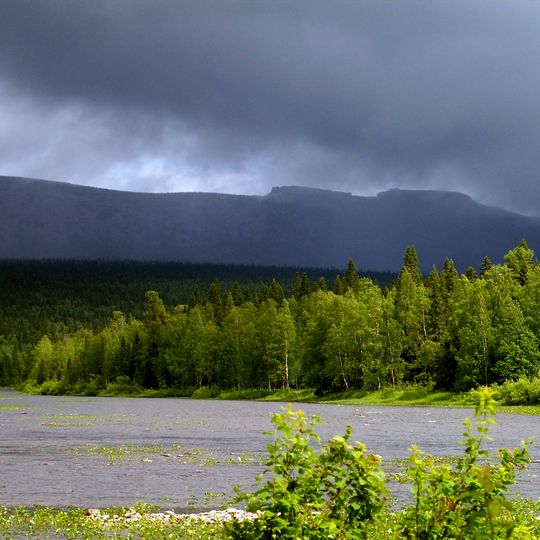
Pechora-Ilych Nature Reserve, Nature reserve in Yaksha, Russia
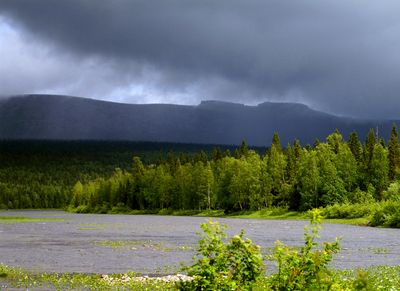
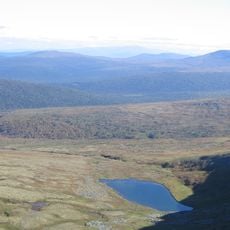
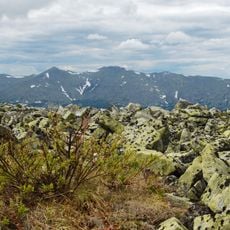
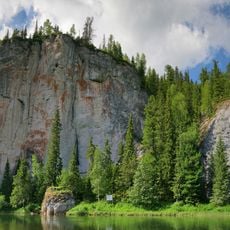
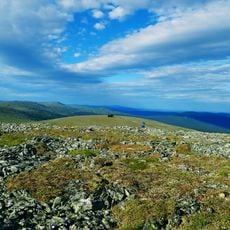
The Pechora-Ilych Nature Reserve is a large protected area in the northern Ural Mountains within Komi Republic. It consists of virgin forests, extensive wetlands, and varied mountain terrain that support diverse plant and animal communities.
The reserve was established on 4 May 1930 as the Pechorsky Reserve, following a 1929 expedition led by Franz Schillinger that covered about 1,500 km by boat and on foot. Its borders were fixed on 30 July 1931. In 1951 the protected area was cut to 93 km², then enlarged in 1959 to 7,213 km²; it remains non-contiguous. UNESCO listed it as a biosphere reserve in 1986 and as part of the Virgin Komi Forests World Heritage Site in 1995.
The moose farm (loseferma) was set up by reserve staff in 1949 to test whether moose could be domesticated; the idea had been put forward in the 1930s by Professor P. A. Manteifel. It lies outside the strictly protected core, so it is not open to casual visitors. The reserve's name comes from the Pechora River and its tributary the Ilych.
The reserve is a strict zapovednik: no general visitor access, and entry requires permission from its administration in Yaksha, the village on the Pechora where the office has stood since 1935. The territory is non-contiguous, split between a lowland section near Yaksha and a highland part along the upper Pechora, so plan routes accordingly. Access has always been difficult; historically the area was reached via the Kama basin.
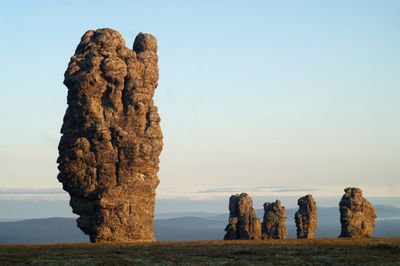
The Manpupuner stone pillars stand on a plateau of the Manpupuner ridge inside the reserve, within the Virgin Komi Forests World Heritage Site. The reserve is a strict zapovednik with no general visitor access, so the formations are not open to tourists; the reserve's moose farm, begun in 1949, is likewise a research facility rather than a public attraction.
The community of curious travelers
AroundUs brings together thousands of curated places, local tips, and hidden gems, enriched daily by 94,358 contributors worldwide.