Yokanga prison, Correctional facility in Ostrovnoy, Russia.
Yokanga prison was a concentration camp for political prisoners on the site of a former naval base near the village of Yokanga, now Ostrovnoy, in Murmansk Oblast. It occupied unheated barracks and dugouts built from 1916, when about 600 workers erected four houses, two warehouses, 28 barracks, two radio masts and a telegraph building. Prisoners were held together with criminals and disciplinary soldiers.
The prison opened on 22 September 1919 on the site of a naval base begun in May 1916 near the village of Yokanga, a week after a revolt at the Mudyug island prison. The White-Army administration of the Northern Oblast ran it until February 1920. About 300 prisoners arrived with the first convoy, and by November their number had risen to 1,080.
The camp's name comes from the nearby village of Yokanga, now the town of Ostrovnoy. A memorial to the prisoners who died there was unveiled in Murmansk on 7 November 1927, the city's first monument, and a memorial obelisk was put up in Yokanga the same year.
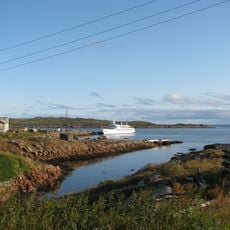
The site lies near the village of Yokanga, today the town of Ostrovnoy in Murmansk Oblast, on the northeast of the Kola Peninsula. The camp no longer exists; a memorial obelisk was put up in Yokanga itself in 1927. The dead from the evacuation were buried in a square in central Murmansk, where a monument to the victims of the 1918-1920 intervention was unveiled on 7 November 1927.
The prison opened on 22 September 1919, a week after a revolt at the Mudyug island prison, where 53 inmates broke through the wire and seized fishing boats. Its first transport brought about 300 prisoners with 110 staff, and by November the camp held 1,080 people. A memorial to the victims was unveiled in Murmansk on 7 November 1927, the city's first monument.
The community of curious travelers
AroundUs brings together thousands of curated places, local tips, and hidden gems, enriched daily by 93,849 contributors worldwide.