Krasny Klyuch, Karst spring in Nurimanov District, Russia
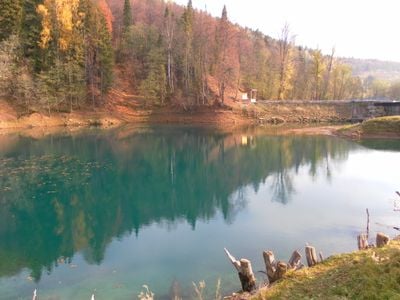
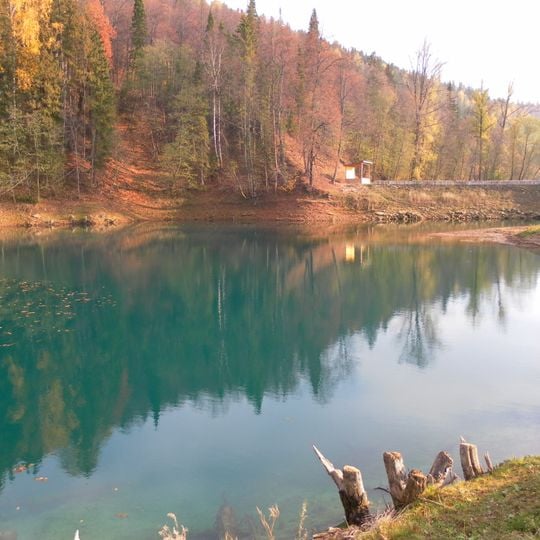
Krasny Klyuch is a karst spring in Nurimanov District that discharges large volumes of water continuously, fed by two connected sinkholes with considerable depth. The spring forms an open pool from which water constantly surges and flows into a natural stream.
In the early 1900s, the spring powered one of Russia's first hydroelectric installations, which supplied energy to an industrial factory nearby. This project demonstrated how the region harnessed natural resources for industrial production early on.
Until 1917 the spring was called Bely Klyuch (White Spring) for the whitish tint of its water; the present name, Krasny Klyuch, replaced it after the revolution. The water still looks greenish-blue with a pale cast, and every second the spring carries over a kilogram of limestone out of its two funnels.
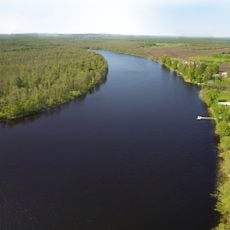
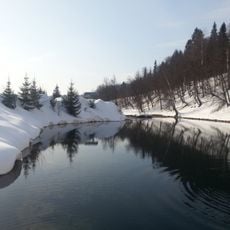
The spring lies on the left bank of the Ufa River, southwest of the Ufa Plateau. Its water stays at 5–6 °C all year, and in winter it warms the river, keeping a 13 km ice-free stretch where ducks winter. The main outflow rises from a 38 m deep sinkhole beside a smaller 20 m one.
The Yaman-Yelga river sinks underground 8 km from its source and runs about 40 km through karst channels before resurfacing; Krasny Klyuch is its main discharge point. In 2002 divers from the Russky Diving club found a 1.2 m opening in the rock wall ejecting pebbles like a slingshot.
The community of curious travelers
AroundUs brings together thousands of curated places, local tips, and hidden gems, enriched daily by 94,387 contributors worldwide.