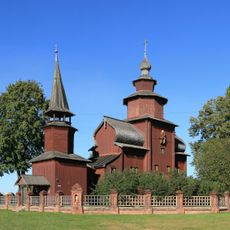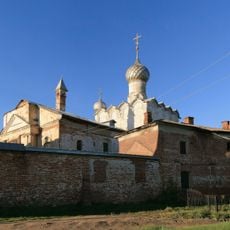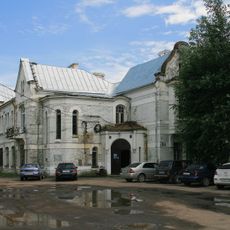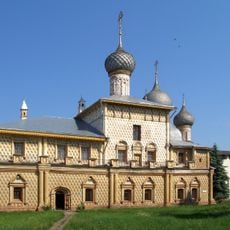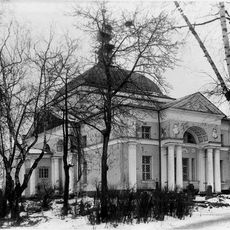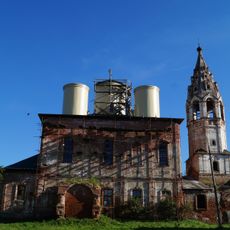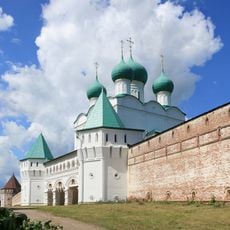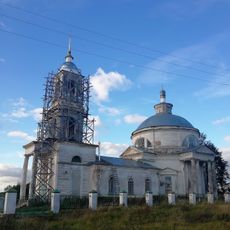
Sts. Boris and Gleb Church, Orthodox temple in Rostov, Russia
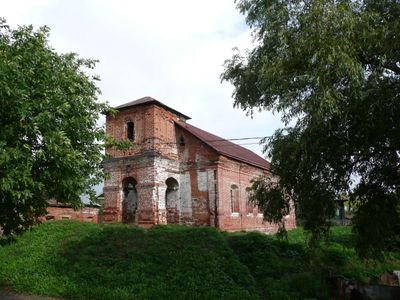
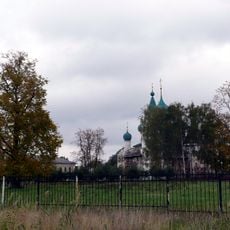
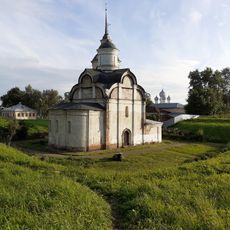
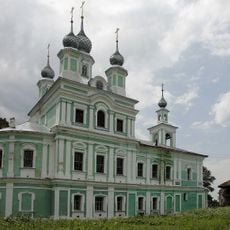
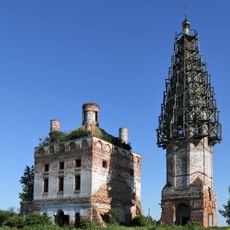
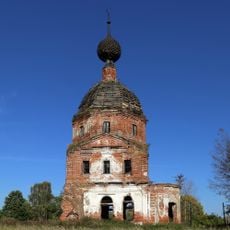
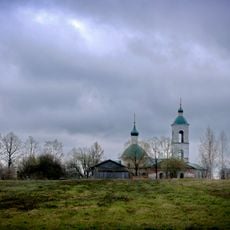
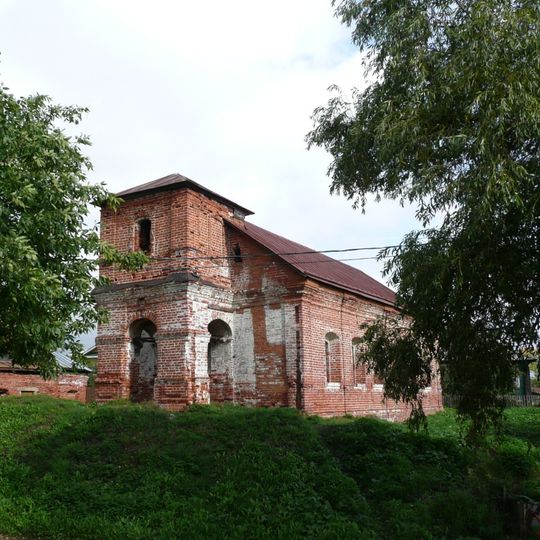
Sts. Boris and Gleb Church is a ruined 18th-century church in Rostov, built in 1761 in provincial Baroque style with a single dome, a gabled refectory and a three-tier bell tower. Beneath it, two-thirds of a pre-Mongol brick church from the 13th century survives within the earthen rampart. The building is now conserved in a ruined state, without domes or bell tower.
The present church was built in 1761 by local merchants, with a small side church added a year later. In 1986 archaeologist Oleg Ioannisyan found that beneath the 18th-century building, two-thirds of a pre-Mongol brick church survived in the rampart. He linked it to a 1287 chronicle entry, making it the earliest surviving stone building raised in Rus after the Mongol invasion. Closed in 1928, it was later conserved as a ruin.
The church gave its name to the Borisoglebskaya half of Rostov, ruled by descendants of Prince Konstantin Vasilyevich. It was the palace church of the Rostov princes, dedicated to the first Russian saints, as was customary for Rurikid dynastic temples. A small side church of Dimitry of Rostov, added in 1762, served winter services.
The church is a ruin conserved in its ruined state, not an active place of worship, so there are no services or interior visits. It stands on the 17th-century rampart at the western end of the Metropolitan Garden, above the buried 13th-century church. Look for the conserved masonry and the information on the archaeological remains; access is from the garden side.
In 1986, Hermitage archaeologist Oleg Ioannisyan found that beneath the 1761 church, two-thirds of a pre-Mongol plinth-brick building survives inside the rampart. He dated it to a 1287 chronicle entry, making it the earliest stone structure raised in north-eastern Rus after the Mongol invasion. The church now stands conserved as a ruin.
The community of curious travelers
AroundUs brings together thousands of curated places, local tips, and hidden gems, enriched daily by 93,277 contributors worldwide.